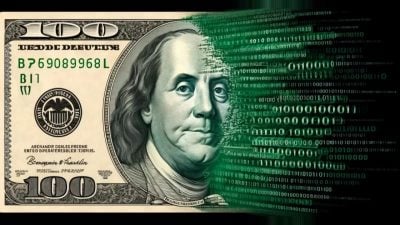
BlackRock's Rieder sees artificial intelligence driving U.S. GDP growth to 6% a year, a projection that arrives even as hiring slows. The forecast, which hinges on AI lifting productivity, could keep the economy expanding without stoking inflation. That scenario carries direct implications for the Federal Reserve's interest-rate path and for markets that have been pricing in a slowdown.
The 6% Growth Forecast
Rieder's estimate stands out against the backdrop of a cooling labor market. Recent data show employers pulling back on new hires, a trend that usually points to slower growth. But Rieder argues that AI's productivity gains can offset that drag, allowing the economy to run hotter than traditional models suggest.
The number itself—6%—is a bold departure from the subdued growth rates that have become the norm in the post-pandemic era. It implies that AI's impact is not just incremental but transformative, reshaping how work gets done across industries.
AI's Productivity Engine
The core of Rieder's argument is that AI can make workers more efficient, enabling the economy to produce more with the same amount of labor. That productivity boost, he believes, can sustain growth without triggering the kind of wage-price spiral that would force the Fed to tighten policy aggressively.
This isn't about a temporary burst of activity. Rieder's outlook suggests AI's contribution will be durable, compounding over time as businesses integrate the technology into their operations. If he's right, the productivity gains could show up in the data over the next few quarters, giving the Fed room to keep rates steady or even cut them without worrying about overheating.
Fed Policy and Market Dynamics
A 6% growth rate would change the calculus for the Federal Reserve. If AI keeps productivity high, the central bank may not need to cut rates as aggressively to support the economy. That would also influence bond yields, stock valuations, and the dollar. Markets have been bracing for a slowdown, but Rieder's outlook suggests a different path—one where growth stays strong even as inflation remains contained.
The implications extend beyond the Fed. Corporate earnings, which have been under pressure from rising costs, could get a boost if AI reduces expenses. Investors who have been rotating into defensive sectors might reconsider their positioning if growth accelerates. The ripple effects would be felt across asset classes.
The Labor-Intensive Sectors Under Pressure
Not all industries benefit equally. AI's efficiency gains could hit labor-intensive sectors like retail, logistics, and manufacturing, where automation may replace workers. Rieder acknowledges that this creates challenges for those industries, even as it boosts overall output. The transition could be uneven, with some regions and workers bearing the brunt of the shift.
For companies that rely heavily on human labor, the pressure to adopt AI is mounting. Those that fail to adapt risk falling behind as competitors cut costs and improve margins. But the social cost is real: job losses in certain sectors could deepen the very slowdown Rieder's forecast is trying to overcome.
The coming months will test Rieder's thesis. If productivity gains fail to materialize, the 6% forecast will fade. But if AI delivers, the Fed and markets will have to rethink their assumptions. For now, the tension between a cooling labor market and a technology-driven growth spurt remains the central question.