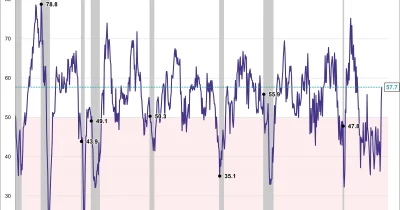
The MNI Chicago Business Index surged to 62.7 in May, far exceeding economists' expectations of 50.3 and reversing the contraction seen the month prior. The reading, released Friday, marks the fastest expansion in the region's manufacturing and service sector activity since early 2022, according to the survey compiled by MNI Indicators.
Back to growth territory
April's reading of 49.2 had signaled a slight contraction—anything below 50 on the index indicates declining business activity. The May number, by contrast, points to robust growth. The jump of more than 13 points is one of the largest month-over-month swings on record for the survey, which is based on responses from purchasing managers at Chicago-area companies.
What the components show
While the headline index is a composite of several sub-indexes, the strong May figure suggests broad-based improvement. New orders, production, and employment all contributed to the rebound, though MNI does not break out the individual components in the preliminary release. The index is often seen as a leading indicator of national manufacturing trends, and its rapid turnaround could signal that supply-chain disruptions and demand weakness that plagued the sector earlier this year are easing.
Why the number matters
The Chicago PMI, as it is commonly called, is one of the earliest monthly reads on U.S. manufacturing health. A reading above 60 is rare and typically associated with very strong expansion. The May result far outstrips the national ISM Manufacturing Index, which has been hovering near 50 in recent months. Analysts will now watch to see if other regional surveys—due out in the coming week—confirm the same pattern of acceleration.
The data comes at a time when the Federal Reserve is trying to gauge whether the economy is overheating. A sharp pickup in business activity could complicate the central bank's efforts to cool inflation. But the Chicago index, while influential, covers only a small geographic slice of the economy.
The next reading of the MNI Chicago Business Index is due in four weeks. Investors and policymakers will be looking for signs that May's burst is sustainable or just a one-month bounce. In the meantime, the national ISM Manufacturing report for May—out Monday—will be the next major test of the factory sector's trajectory.