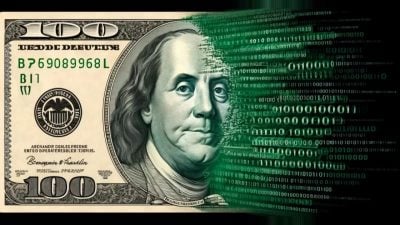
The Depository Trust & Clearing Corporation (DTCC) has completed its first live trades of tokenized assets, marking a concrete step toward modernizing how securities are settled. Major Wall Street institutions took part in the transactions, which the DTCC says could eventually reshape the plumbing of financial markets.
Tokenization in Action
Tokenization turns traditional assets — stocks, bonds, even funds — into digital tokens on a shared ledger. The DTCC’s live trades put that concept into practice, moving tokenized versions of real securities between participants. The company has been testing the technology for years, but this is the first time it has handled actual, not simulated, trades in a live environment.
The trades were executed through the DTCC’s existing infrastructure, meaning they didn’t require a separate blockchain network. Instead, the tokens represent ownership rights that are legally tied to the underlying assets. That distinction matters: regulators and market players have been wary of crypto-style tokens that exist outside traditional legal frameworks.
Wall Street’s Role
Several large banks and broker-dealers participated in the live trades, though the DTCC hasn’t named them individually. Their involvement signals that the financial industry is serious about tokenization, not just experimenting on the sidelines. For years, Wall Street has talked about the potential of distributed ledger technology. Now it’s putting money behind it.
The DTCC acts as the central securities depository for the U.S. market, clearing and settling the vast majority of trades. If tokenization takes hold here, it could ripple through the entire system — affecting how trades are confirmed, how collateral is managed, and how assets move between firms.
Expected Benefits
Proponents say tokenization can make markets more efficient by automating manual processes, reducing the number of intermediaries, and speeding up settlement. The DTCC’s move is aimed at cutting costs and lowering operational risk. In a market where trillions of dollars change hands daily, even small improvements can have outsized effects.
But the shift also raises questions. How will regulators oversee tokenized assets? Will the technology be compatible with existing rules? And can the DTCC’s system scale to handle the volume of the entire U.S. securities market? Those questions remain open.
The DTCC hasn’t announced a timeline for broader adoption. For now, the live trades are a proof of concept — one that shows tokenization works in practice, not just in theory. Whether it becomes the new normal depends on how quickly the rest of the industry follows Wall Street’s lead.