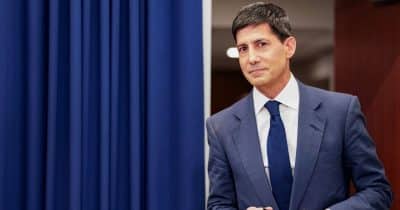
New Federal Reserve Chairman Kevin Warsh held interest rates steady in his first press conference on Thursday, a widely expected move that nonetheless carried a heavier-than-usual freight of subtext. Warsh also announced the formation of five internal task forces and repeatedly stressed a data-driven focus — a shift that could ripple through both traditional markets and the crypto space.
The rate decision itself
The Federal Open Market Committee voted unanimously to keep the benchmark federal funds rate at its current level, as the central bank continues to weigh stubborn inflation against a still-solid labor market. The hold was no surprise: markets had priced in a 95% chance of no move. But Warsh used his debut to lay down markers about how he intends to run the institution.
Five task forces, one message
The new chairman announced the creation of five internal task forces, though he did not detail their specific mandates or membership. The move is intended to streamline how the Fed processes economic data and communicates with the public. It also signals that Warsh wants to break from the more personality-driven style of his predecessors.
A data-driven Fed
Warsh repeatedly emphasized that policy decisions will rest on incoming data, not forecasts or gut feelings. That language matters. If the Fed truly shifts toward a more mechanistic, data-first approach, it could reduce the volatility that sometimes follows ambiguous Fed statements. For crypto markets, which often move on macro headlines, a less opaque Fed could mean a different risk environment.
The crypto market has spent the last two years reacting to every dot-plot shift and press conference twitch. A more predictable Fed — one that communicates through task-force reports and data releases rather than off-script remarks — might dampen the liquidity swings that have whipsawed digital assets. But it also means less drama, and crypto traders have historically thrived on drama. The new approach may challenge traditional Federal Reserve communication strategies, and that could reshape how crypto markets price in monetary-policy risk.
Warsh said nothing directly about digital assets. But the infrastructure he's building — task forces, data frameworks, a commitment to transparency — could make the Fed's actions easier to anticipate. That's a double-edged sword for an asset class that often rallies when the central bank surprises.
The next Fed meeting is scheduled for late July. Market participants will be watching for the first task-force updates to see whether Warsh's data-driven vision translates into concrete changes — or remains a rhetorical promise.