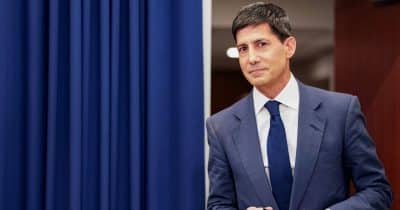
Federal Reserve Chair Kevin Warsh signaled this week that the central bank is open to incorporating new economic data sources into its decision-making. The move could make the Fed more responsive to real-time conditions — but it also puts Warsh's own ties to the crypto industry under a brighter spotlight.
What Warsh said
Speaking on Thursday, Warsh didn't announce any specific data partnerships or tools. He broadly suggested the Fed would explore non-traditional indicators — think payment flows, satellite imagery, or private-sector indexes — to supplement the usual jobs and inflation reports. The goal, he indicated, is to shorten the lag between economic shifts and policy action.
That's a notable departure from the Fed's usual caution around unproven datasets. It's also a bet that more granular information could help avoid the kind of policy whiplash that has rattled markets in recent years.
Even a vague nod toward faster data feeds can move expectations. If the Fed starts reacting to monthly or even weekly signals, rate decisions could become less predictable — and volatility could spike. Traders now have another variable to price in: not just what the data says, but how quickly the Fed might act on it.
The timing isn't great for stability. Markets have been on edge as inflation readings bounce and growth slows in parts of Europe and Asia. A more responsive Fed means the old playbook of waiting for the next FOMC meeting might no longer apply.
Crypto ties under the microscope
Warsh's crypto connections are getting a second look. Before becoming Fed chair, he served on the board of a blockchain analytics firm and advised several digital asset startups. Those relationships don't violate ethics rules, but they raise a question: will the Fed's new openness to alternative data create a back door for crypto-friendly metrics?
Critics point out that many private-sector data providers have ties to the crypto world. If the Fed leans on such sources, it could indirectly validate digital asset markets that regulators elsewhere are still struggling to control. Warsh has not directly addressed the conflict-of-interest concerns.
The Fed plans to release a formal request for information on alternative data sources by late summer. That RFI will likely name specific categories the central bank is interested in — and companies hoping to supply them will have to disclose their own funding and client lists. For Warsh, the process will test whether he can keep his distance from old business partners while pushing the Fed into new territory.