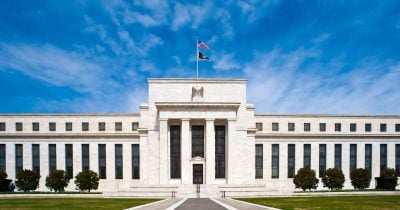
The Federal Reserve kept its benchmark interest rate unchanged at 3.50%-3.75% on Wednesday, the fourth straight meeting without a move. But the tone from the central bank was more hawkish than many anticipated, with nine of 18 Federal Open Market Committee participants now projecting at least one rate increase before the end of 2026. That marks a notable shift from earlier forecasts that leaned toward cuts or a prolonged pause.
A Hawkish Turn in Projections
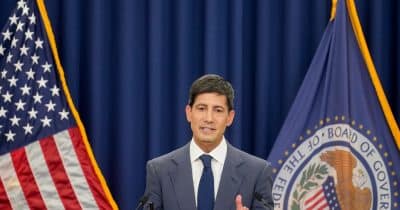
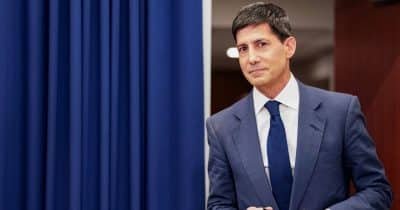
The FOMC's updated dot plot shows a clear divide. Nine members see a rate hike this year, while others remain on the fence or still expect cuts. The committee also removed previous language about 'additional rate adjustments,' replacing it with a purely data-dependent stance. Fed Chair Kevin Warsh, in his first press conference, expressed a preference for a 'quieter' Fed with reduced forward guidance, signaling less hand-holding for markets going forward.
Inflation and the September Risk
Inflation remains sticky at 4.2% year-over-year, well above the Fed's target. Citadel Securities warned that markets may be underestimating the risk of a September rate hike. The firm cited strong wage growth, resilient demand, supply-chain strains, and a boom in artificial intelligence investment as factors that could push the Fed to act. The warning added to the jittery mood.
Market Reaction
Stocks fell after the decision. The S&P 500 dropped 0.6%, the Nasdaq Composite lost 0.7%, and the Dow Jones Industrial Average shed 160 points, or 0.3%. Bond yields rose sharply. The 2-year Treasury yield climbed nearly 11 basis points to 4.153%, while the 10-year yield increased 4 basis points to 4.469%. The moves reflected a repricing of rate expectations.
A Quieter Fed, but Louder Division
Warsh's push for a less vocal central bank introduces uncertainty. Fidelity managers had previously warned that a shift in the Fed's communication style could spark bond market volatility. The hawkish outcome also highlights ongoing division within the FOMC, especially as the economy faces an Iran-related energy shock that is driving both higher inflation and slower growth — a difficult combination for policymakers.
The next test comes in September, when the FOMC will release updated economic projections. Markets will be watching closely to see whether the hawkish shift turns into action.