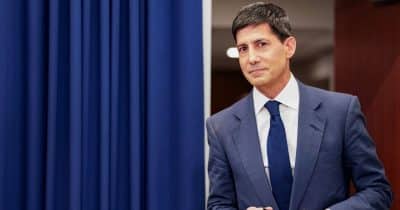
New Federal Reserve chair Kevin Warsh used his first press conference to signal a rate hike in 2026, a hawkish shift that could roil financial markets and force investors to rethink their strategies. The move, announced Wednesday, marks a clear departure from the previous administration's more cautious approach.
Warsh's hawkish tone
Warsh, who took over the Fed's top job in January, didn't mince words. He told reporters the central bank sees the need to tighten monetary policy earlier than many had anticipated. The 2026 rate increase would be the first under his leadership, and it's aimed at preempting inflationary pressures that have built up over the past year.
The announcement caught many off guard. Economists had expected the Fed to hold rates steady through at least 2027. But Warsh argued that with the economy running hot and unemployment low, waiting longer could force sharper moves later.
The immediate reaction was a sell-off in bonds and a spike in the dollar. Stock futures dipped as traders recalibrated their portfolios. The message from the new chair is clear: the era of cheap money is over. For investors who loaded up on risk assets expecting a slow-tightening cycle, the path just got rockier.
Volatility is likely to pick up across asset classes. Currency markets, in particular, could see sharp swings as global traders adjust to the Fed's more aggressive stance. Emerging economies that borrowed in dollars may feel the squeeze as the greenback strengthens.
Uncertainty ahead
Warsh didn't provide a precise timeline beyond the 2026 target. He left open the possibility of additional hikes if inflation doesn't cool as projected. That ambiguity adds another layer of uncertainty for businesses planning capital investments or for households considering big purchases like homes and cars.
The Fed's shift also carries political weight. Warsh, a former Treasury official, was seen as a moderate, but his first policy signal leans decisively hawkish. Lawmakers on both sides of the aisle will be watching closely — especially as the 2026 midterms approach. Higher borrowing costs could slow the economy, and that's rarely a popular outcome.
What isn't clear yet is how far the Fed will go. Warsh's press conference left the impression that the central bank is willing to act aggressively if needed. But whether that resolve holds if markets tumble or growth stumbles is a question only the coming months can answer.