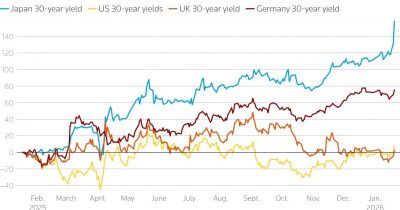
A broad global bond selloff this week pushed sovereign yields to levels not seen in years, rattling markets from equities to crypto. The move, driven by shifting expectations for inflation and monetary policy, is forcing investors to reassess the risk-reward calculus on everything from Bitcoin to tech stocks. For crypto traders already navigating a choppy 2026, the bond rout adds a new layer of macro uncertainty.
Yields surge across the curve
The selloff was relentless. Yields on benchmark 10-year government bonds in the U.S., Germany, and the U.K. each touched multi-year highs during Tuesday's session. Traders cited a combination of stronger-than-expected economic data and hawkish commentary from central bank officials as the trigger. The speed caught many off guard—yields rose more than 20 basis points in a single day in some markets.
Risk assets under pressure
Higher bond yields make safer fixed-income securities more attractive relative to volatile assets like cryptocurrencies and equities. The immediate consequence is a rotation out of risk. Crypto markets, which had been grinding higher in recent weeks, saw a sharp pullback. The correlation between digital assets and traditional risk trades remains intact: when bonds sell off, crypto tends to sell off too. Analysts point out that the same macro factors—tightening liquidity, rising real rates—weigh on both.
The timing isn't great. Crypto has been trying to decouple from macro headlines, but this week's action proves the link is still strong. For altcoins especially, the drawdown was steeper than for Bitcoin, suggesting speculative appetite is fading fast.
Central banks in a bind
The bond selloff creates a headache for central banks. If they respond by raising rates further or holding them high for longer, they risk choking off growth. If they signal a pivot, they risk fueling inflation again. Neither option is comfortable. The data that sparked the selloff—strong employment and sticky services inflation—gives them little cover to ease. Policymakers in the U.S. and Europe are now walking a tightrope, trying to avoid both a recession and a renewed inflation spike.
For crypto, the central bank dilemma means the macro backdrop isn't likely to turn friendly anytime soon. A hawkish Fed or ECB keeps pressure on risk assets; a surprise dovish turn could spark a relief rally, but the bond market is signaling that such a turn isn't imminent.
What to watch next
The next major test comes Friday, when the U.S. releases its personal consumption expenditures price index—the Fed's preferred inflation gauge. A hot reading could push yields even higher. Until the bond market stabilizes, crypto traders should expect more volatility. The selloff is a reminder that even a market as narrative-driven as crypto can't escape the gravitational pull of global macro forces.