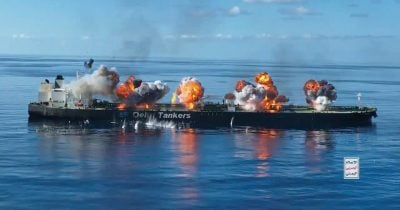
Middle East oil producers are pushing forward with pipeline projects designed to offer alternative export routes that bypass the Strait of Hormuz, a narrow waterway that has long been a flashpoint for geopolitical tension. The moves come as the region's major exporters look to secure their revenue streams against potential disruptions.
Why the Strait of Hormuz Matters
The strait, a 21-mile-wide channel between Iran and Oman, handles roughly a fifth of the world's oil supply. Any closure or blockade — whether from military conflict, sabotage, or political brinkmanship — could send global crude prices soaring. For Gulf producers, the risk is existential: their economies depend on steady oil exports, and a prolonged shutdown would devastate budgets.
Pipeline projects offer a workaround. By moving crude overland to ports on the Gulf of Oman or the Arabian Sea, exporters can keep shipments flowing even if the strait is blocked. Several such initiatives are now gaining traction, though details remain sparse.
The Pipeline Projects
One notable effort is the Abu Dhabi Crude Oil Pipeline, which runs from Habshan in the UAE to the port of Fujairah on the Gulf of Oman. Already operational, it can carry up to 1.5 million barrels per day — roughly two-thirds of the UAE's current production. Saudi Arabia has its own Petroline system, a 1,200-kilometer network that moves crude from the eastern oil fields to the Red Sea port of Yanbu. That pipeline has a capacity of about 5 million barrels per day, though it often runs below that level.
Iraq is also exploring options. The country has discussed reviving a pipeline through Turkey to the Mediterranean, but political and security hurdles have stalled progress. Meanwhile, Oman has proposed a pipeline from its oil fields to the Indian Ocean, but that project remains in early planning stages.
These are not new ideas — many were conceived decades ago — but the urgency has increased. Recent attacks on Saudi oil facilities in 2019 and ongoing tensions with Iran have underscored the vulnerability of the strait. Pipeline projects that once seemed too expensive or unnecessary are now being reconsidered.
Market Signals
Despite the heightened focus on alternative routes, prediction markets suggest traders are not betting on a near-term crisis. The probability that West Texas Intermediate crude will reach $110 a barrel by July 2026 currently stands at just 4.4%. That low figure implies that, for now, the market sees a limited chance of a supply shock severe enough to push prices that high.
Still, the pipeline push reflects a longer-term strategy. Even if the strait remains open, having a backup route gives Gulf states more leverage in negotiations and reduces their exposure to a single chokepoint. The projects also align with broader efforts to diversify export destinations, particularly as Asian demand grows.
Construction timelines remain unclear. The UAE's Fujairah pipeline is already in use, but Saudi Arabia's Petroline may require upgrades to reach full capacity. Iraq's plans face political obstacles, and Oman's proposal is still in the feasibility stage. No firm completion dates have been announced for any of the newer initiatives.
What is clear is that the calculus has shifted. For decades, the Strait of Hormuz was seen as an unavoidable risk. Now, Gulf producers are actively working to make it less central to their export strategy. Whether those efforts will be enough to insulate them from a future crisis is an open question — one that will be tested the next time tensions flare in the region.