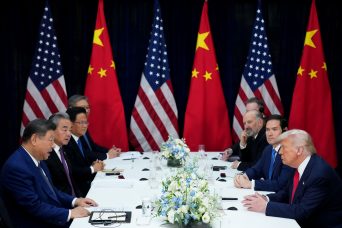
China has tapped senior economic official He Lifeng to lead trade negotiations with a United States delegation in South Korea, a move that could signal a rare de-escalation in the strained economic relationship between the world’s two largest economies. The talks, set to take place in a neutral location, are being closely watched by global investors and policymakers.
Why South Korea?
Choosing South Korea as the venue is itself a diplomatic signal. The country has long served as a neutral ground for high-stakes dialogues, offering both sides a way to meet without the political baggage of a home-field advantage. For Beijing and Washington, it also shows the importance of regional stability—especially as both capitals navigate tensions over trade, technology, and supply chains.
What’s at Stake
He Lifeng, a vice premier and key architect of China’s economic policy, will face a US delegation whose composition has not been fully disclosed. The talks mark the first high-level face-to-face engagement in months, after a series of tariff escalations and export controls. A thaw could ease pressure on global supply chains and restore some investor confidence, but expectations remain guarded. Neither side has released a formal agenda, though market watchers are betting that core issues—tariffs, tech restrictions, and market access—will dominate.
Market Implications
Global markets have been volatile in recent weeks, partly due to uncertainty around US-China trade policy. Any sign of progress in South Korea could trigger a rally in risk assets, while a breakdown would likely deepen selling. The talks come at a sensitive time: central banks in both countries are wrestling with inflation and growth, and a trade truce could give policymakers more breathing room. But concrete outcomes remain uncertain, and analysts are wary of reading too much into a single meeting.
Investors will be watching for any joint statement or press conference afterward. Without a public communiqué, the real outcome may stay hidden—leaving markets to guess whether the thaw is real or just a temporary pause.