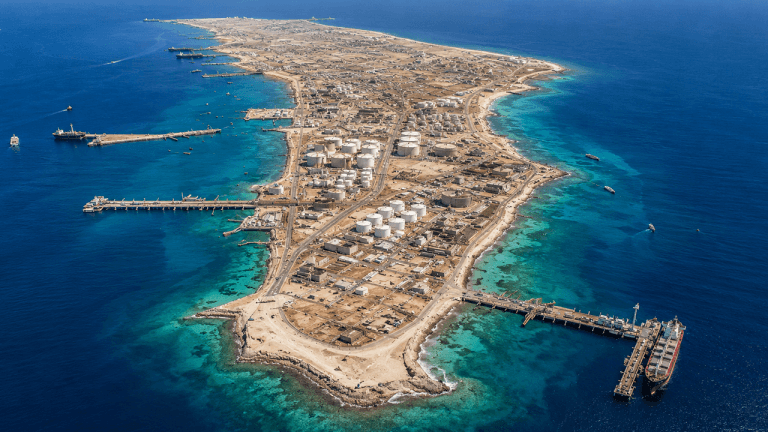
Iran's Khatam al-Anbiya Central Headquarters, the country's top military command, has ordered the closure of the Strait of Hormuz to oil tankers. The directive effectively blocks the narrow chokepoint between the Persian Gulf and the Gulf of Oman, a waterway that carries about 20% of the world's petroleum.
What the Strait of Hormuz means for global oil
The strait is one of the most critical maritime passages on the planet. Every day, roughly 17 million barrels of crude and refined products pass through its 21-mile-wide channel. For Gulf producers — Saudi Arabia, Iraq, the UAE, Kuwait, and Iran itself — the strait is the only practical sea route to international buyers. Any halt in traffic there hits supply chains within hours.
The order's scope and timing
The closure order specifically targets oil tankers. It is not clear from the announcement whether other commercial vessels or military ships are affected. The Khatam al-Anbiya command did not release a timeframe for the closure or specific enforcement measures. Tanker operators and insurers now face an immediate question: can they still navigate the strait?
What happens next for oil markets
Physical oil traders and shipping companies are likely to reroute cargoes around the Arabian Peninsula, using the longer Bab el-Mandeb strait or the Suez Canal. That adds days and thousands of dollars in fuel costs per voyage. Brent crude and other benchmarks could spike within the first trading session, though the size of the move depends on how long the closure lasts. No alternative pipeline capacity exists to fully replace the strait's flow.
International reaction has not yet been detailed, but the order places the Strait of Hormuz at the center of an escalating dispute. The question now is whether the closure is a temporary pressure tactic or the start of a sustained blockade.