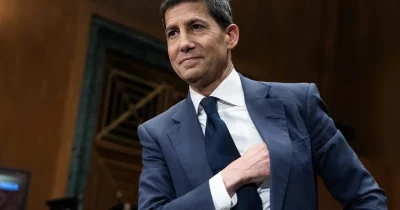
Kevin Warsh was sworn in as chairman and a member of the Federal Reserve Board on May 22, marking the end of Jerome Powell's tenure at the helm of the U.S. central bank. The Senate confirmed Warsh earlier this month, and the Federal Open Market Committee (FOMC) subsequently voted unanimously to make him the leader of its monetary policy committee.
The transition at the Fed
Warsh takes over after Powell, who had led the Fed through a period of tight monetary policy aimed at curbing inflation. The handover comes at a time when the central bank is navigating both domestic price pressures and global financial uncertainty. Warsh's appointment was widely anticipated after the president nominated him, though the confirmation process drew attention from lawmakers on both sides of the aisle.
By taking the oath on May 22, Warsh formally assumed the dual role as the public face of the Fed and the chairman of the FOMC, the body that sets short-term interest rates. The FOMC's unanimous decision to select him underscores the committee's confidence in his ability to steer monetary policy.
What the Senate confirmation covered
During his Senate testimony, Warsh fielded questions on inflation targets, banking regulation, and the independence of the central bank. The final vote, while not disclosed in raw numbers, cleared the threshold needed to replace Powell. Supporters pointed to Warsh's experience as a former Fed governor and his work in private finance as qualifications for the role. Critics raised concerns about his ties to Wall Street, but the confirmation ultimately succeeded.
The FOMC's role and Warsh's first meeting
The FOMC is scheduled to hold its next regular meeting in June, and Warsh will preside over that session as chairman. With the committee's unanimous selection behind him, he now holds the authority to set the agenda for discussions on interest rates, the Fed's balance sheet, and forward guidance. Market participants will be watching for any early signals about the pace of rate cuts or hikes.
Warsh inherits a Federal Reserve that has been raising rates aggressively since 2022 to combat inflation, which has eased but remains above the 2% target. His first major decision will be whether to continue, pause, or reverse the tightening cycle.
Unresolved questions
One open issue is how Warsh will approach regulatory oversight — the Fed is in the middle of a review of capital requirements for large banks. Another is his stance on digital currencies and the Fed's exploration of a central bank digital dollar. So far, Warsh has not laid out a detailed policy agenda beyond his confirmation statements. The June FOMC meeting will offer the first concrete look at how he plans to lead.