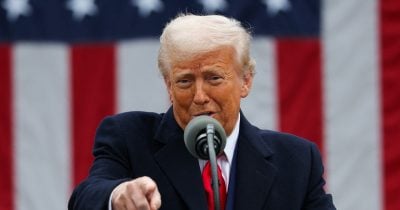
President Trump has imposed a new tariff on Chinese goods, raising the total tariff rate to 20%. The move exacerbates global trade tensions, prompting supply chain shifts and potential economic strain on international relations.
The 20% Threshold
The latest tariff brings the cumulative duty on Chinese imports to 20%, a level that makes goods more expensive for U.S. buyers. The increase is part of a series of trade actions that have drawn the two largest economies into a sustained confrontation over market access, technology and fair trade practices.
The exact scope of goods covered by the new tariff has not been specified, but the broader measure is widely understood to cover a broad range of Chinese exports, from consumer electronics to industrial components. The administration has framed the tariff as a way to pressure China to change its trade behavior, but the immediate effect is a direct cost for businesses that rely on Chinese supply chains.
Supply Chains Under Pressure
The tariff is prompting supply chain shifts. Companies that have long sourced from China are now reassessing their production networks. Some are exploring alternative manufacturing hubs in Southeast Asia, India or Mexico, while others are renegotiating contracts or absorbing the added cost into their profit margins. The shift is not instant, but it is already showing in trade data and corporate planning.
For many firms, the 20% rate is a significant threshold. When import costs rise by that much, it changes the arithmetic of where to produce a product. A factory in Vietnam might become cheaper than one in Shanghai, even after accounting for logistics and the time needed to set up new lines. The result is a reordering of global supply chains that will take years to fully settle.
Diplomatic Ripples
The tariff increase also deepens diplomatic friction. The U.S. and China have been locked in a cycle of trade retaliation, and each new action adds to the stress on bilateral relations. Beyond the two countries, the ripple effects are being felt in other capitals as trading partners adjust their strategies to avoid being caught in the crossfire.
The potential economic strain on international relations is not limited to Washington and Beijing. Countries that are closely tied to Chinese supply chains, or that depend on the U.S. market for their exports, are now forced to navigate a more unpredictable trade environment. The tariff is a reminder that trade policy is no longer just a technical matter of customs duties; it is a lever that can reshape alliances and shift the balance of power.
The tariff is now in effect, and businesses are already factoring the new cost into their 2025 plans. The question of whether the measure will achieve its stated goal is still open, but the immediate consequence is clear: the cost of trade between the U.S. and China just went up.