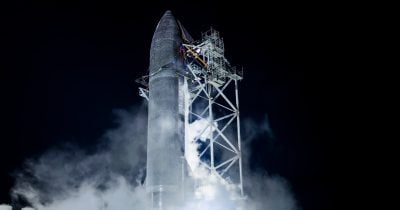
Norway's sovereign wealth fund, the world's largest at $2.2 trillion, has disclosed a $1.22 billion stake in SpaceX — its first investment in the aerospace company. The move marks a strategic shift toward space-related assets for the fund, which has traditionally focused on stocks, bonds, and real estate.
Why the fund moved into aerospace
The Norwegian fund, formally known as the Government Pension Fund Global, manages the country's oil revenues. Its decision to buy into SpaceX signals a deliberate push into aerospace, a sector that has grown increasingly commercial in recent years. The fund has not said whether it plans to expand its space portfolio, but the size of the stake — roughly 0.05% of the fund's total value — suggests a cautious but notable entry.
SpaceX, founded by Elon Musk, is one of the few private companies with a valuation high enough to attract a fund of this scale. The Norwegian fund typically invests in publicly traded companies, so a private placement like this requires special approval. The disclosure came in the fund's latest quarterly report, which lists holdings as of the end of the period.
What this could mean for other sovereign funds
Norway's fund is often seen as a bellwether for institutional investors. If it sees value in aerospace, other sovereign wealth funds may follow. That could open up more capital for space startups and established players alike. But the fund's move is also a bet on the long-term viability of commercial space travel and satellite services — a market that has seen both rapid growth and high-profile failures.
The fund has not commented on its expectations for SpaceX's performance. It has, however, been increasing its exposure to technology and innovation-driven companies in recent years, and this stake fits that pattern.
The fund's broader strategy
Norway's wealth fund has been diversifying beyond its traditional holdings for over a decade. It has added renewable energy infrastructure, unlisted real estate, and now, private aerospace. The SpaceX stake is small relative to the fund's total assets, but it represents a new asset class for the fund — one that could grow if the investment performs well.
The fund's leadership has said in the past that it seeks to invest in companies that offer long-term returns and sustainable growth. SpaceX, with its dominant position in satellite launches and its Starlink internet service, fits that description on paper. Whether it delivers remains to be seen.
The fund's next quarterly report, due in a few months, will show whether it has added to the position or trimmed it. That will be the first concrete sign of how confident the fund feels about its aerospace bet.