OpenAI made its first appearance at the Cannes Lions festival this week, pitching ChatGPT advertising to a room of marketers. The reception? Lukewarm at best. Senior advertising executives at the event said the AI company still lacks the targeting and measurement tools needed to take on Google's search-ad dominance.
Why the reception was cool
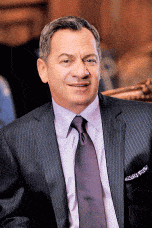
OpenAI's global head of ads, David Dugan, told attendees the company is committed to building advertising into a major revenue stream. But the ad buyers in the room weren't sold. They pointed to gaps in OpenAI's ad infrastructure — no advanced audience targeting, no proven return-on-ad-spend metrics. Without those, advertisers said they can't justify shifting budgets away from established platforms.
The company also faces baggage from an early ad rollout in February. Consumers pushed back when OpenAI tested app suggestions that felt like unwanted promotions. Paying subscribers were especially vocal, arguing their monthly fees should buy an ad-free experience. The backlash forced OpenAI to pull back, but the memory lingers.
Inside OpenAI's ad ambitions
Despite the cool reception, OpenAI's plans are enormous. Dugan said roughly 20% of ChatGPT queries carry direct commercial intent — think travel, retail, health, beauty, and financial services. That's a built-in audience of people already shopping or researching purchases. The company told investors it could grow advertising to a $100 billion business by 2030, roughly half of Meta's current annual ad revenue.
But the numbers are a long way from reality. OpenAI spent $34 billion last year and remains unprofitable. Its IPO filing targets a valuation above $1 trillion, but Wall Street will want to see a clear path to profitability. Advertising at that scale would help, but it's a steep climb.
The subscriber problem
Paying users are the biggest hurdle. They don't want ads, period. OpenAI researcher Zoë Hitzig resigned when ad testing began, saying she had reservations about using private human thought data for advertising. That's a warning sign for a company that collects billions of conversations.
The tension is obvious: OpenAI needs revenue, but its most loyal customers see ads as a betrayal. If the company can't solve that, its ad push could alienate the very users who put it on the map.
The competition heats up
Anthropic, maker of the Claude chatbot, ran Super Bowl ads mocking poorly targeted chatbot advertising. The message was clear: Claude is a cleaner, ad-free alternative. OpenAI CEO Sam Altman fired back, calling Claude an 'expensive product for rich people.'
The spat highlights a deeper battle. OpenAI wants ads; Anthropic wants subscriptions. Both models have flaws. OpenAI risks annoying users; Anthropic risks pricing itself into a niche. The winner may be the one that finds a balance — or a third way entirely.
For now, OpenAI leaves Cannes with more questions than answers. Can it build the targeting tools advertisers demand? Will paying subscribers accept a tiered ad model? And can it hit that $100 billion ad goal without alienating the people who made ChatGPT a household name? No one at the festival had those answers.