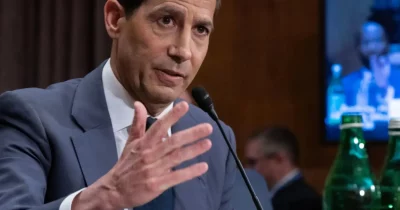
The CEO of Saudi Aramco warned Monday that a prolonged closure of the Strait of Hormuz could slice 100 million barrels of oil out of global supply every week. The statement from the head of the world's largest oil company underscores the staggering vulnerability of energy markets to a single maritime chokepoint.
The warning from the world's top oil producer
Saudi Aramco's chief executive did not specify a scenario or timeframe for the hypothetical closure, but the figure itself — 100 million barrels per week — highlights the scale of disruption a blockade would cause. The Strait of Hormuz, a narrow waterway between Iran and Oman, sees about a fifth of the world's oil pass through it daily. Any sustained halt would ripple through supply chains almost immediately.
The warning comes as tensions in the region remain elevated, though the CEO did not tie the statement to any particular recent incident. His remarks appear aimed at reminding global markets just how much hinges on freedom of navigation in the Gulf.
100 million barrels: what the number means
To put that weekly loss in context: 100 million barrels is roughly equivalent to total daily production from OPEC's second-largest producer. A cut of that size would force refineries from Asia to Europe to scramble for alternative crude, likely driving up prices and drawing down strategic reserves.
Saudi Aramco itself operates the world's largest spare oil production capacity, but even that cushion would be quickly eroded if the strait were shut for weeks. The company has invested heavily in pipeline bypass routes, though those alternatives move only a fraction of what transits the waterway.
Why the Strait of Hormuz is so critical
The strait is barely 30 kilometers wide at its narrowest point, yet nearly 17 million barrels of crude and refined products flow through it each day, according to shipping data. That volume makes it the single most important oil chokepoint on the planet. A closure would effectively sever the Persian Gulf from the Indian Ocean, trapping tankers and halting exports from Saudi Arabia, Iraq, Kuwait, the UAE, and Qatar.
The CEO's warning didn't address how such a closure might occur — whether through military conflict, political brinkmanship, or an environmental disaster. But the message is clear: the global oil system remains deeply exposed to events in one narrow stretch of water.
No immediate response came from shipping companies or oil traders. The warning stands as a stark reminder of the fragility behind the world's daily fuel supply.