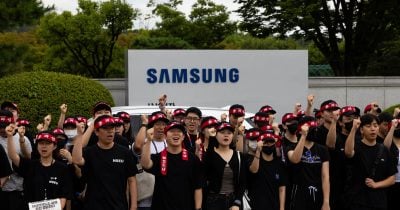
South Korea's government has filed for emergency arbitration to stop a strike at Samsung that threatens to disrupt global tech supply chains and cost the economy an estimated $67 billion. The move comes after labor negotiations between the company and its workers stalled, raising the risk of the first major walkout at the tech giant in decades.
Why arbitration was requested
Emergency arbitration is a rarely used legal tool under South Korean labor law. It allows the government to intervene when a strike could cause severe damage to the national economy or public welfare. In this case, the potential hit to Samsung's production lines — and the ripple effects across semiconductor and consumer electronics markets — prompted authorities to act before any work stoppage begins.
The Ministry of Employment and Labor confirmed it had submitted the request to the National Labor Relations Commission. A decision is expected within weeks. Both sides have been ordered to maintain normal operations until the commission rules.
The cost of a walkout
The $67 billion figure — roughly 4% of South Korea's GDP — reflects the value of goods and services that could be lost if Samsung's factories shut down for even a short period. Samsung is the country's largest company, and its chip plants alone account for a significant chunk of global semiconductor supply. A strike would idle production lines that run around the clock, hitting everything from memory chips to smartphone assembly.
That's not just a problem for South Korea. Tech companies around the world rely on Samsung for components, and any disruption would cascade through already strained supply chains.
Global supply chain risks
Samsung dominates the market for DRAM and NAND flash memory — chips used in nearly every computer, phone, and data center. A strike could tighten supply just as demand picks up, driving up prices and delaying product launches. Automakers, which have been struggling with chip shortages for two years, could face new delays. The timing is especially bad for the electronics industry, which is gearing up for the holiday season.
South Korea's government is keenly aware of these risks. The country has positioned itself as a critical link in the global tech supply chain, and any disruption would undermine that status. Emergency arbitration is a way to keep that chain intact while the underlying labor dispute is resolved.
Labor rights vs. economic stability
The case highlights a tension that governments around the world grapple with: how to protect workers' right to strike without endangering the broader economy. Samsung's employees have been pushing for higher wages and better working conditions, arguing that the company's record profits should be shared more fairly. The company says its current offer is competitive and that a strike would hurt everyone.
For now, the arbitration process will decide the next move. If the commission rules in favor of the government, the strike would be blocked or postponed. If it sides with the union, Samsung's factories could go dark — and the $67 billion question would become very real.