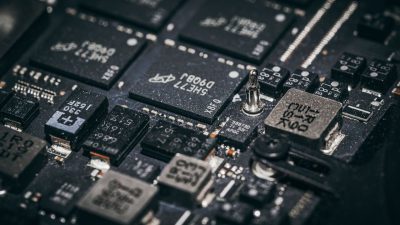
South Korean stocks resumed their decline on Monday after DeepSeek's latest model reignited concerns about demand for memory chips. Market worries over AI financing added to the pressure, turning a single product launch into a broader risk-off signal for the country's tech-heavy market.
There were no specific index levels or company moves in the initial reports, leaving investors to read the selloff as a sentiment-driven reaction rather than a repricing based on hard numbers.
Why a model launch moved a stock market
DeepSeek's new model appears to be more efficient than its predecessors, which is exactly the problem for memory chip makers. If AI models can do more with less hardware, the demand for high-bandwidth memory and the expensive infrastructure that goes with it gets called into question.
📊 Market Data Snapshot
South Korea is the most concentrated expression of that trade. The country's benchmark is dominated by memory chip makers whose profits have been tied to the AI buildout. When the efficiency narrative shifts, the market's most levered AI proxy is the first to feel it.
The financing worry underneath
The drop isn't just about chip demand. Concerns over AI financing — the debt and vendor arrangements that have funded data center and chip capacity expansions — are compounding the selloff. A demand scare doesn't only hit equity prices. It raises questions about refinancing risk for leveraged capex programs, and that's a harder problem to wave away.
Monday's move suggests investors are treating the two issues as linked: slower memory demand means less revenue to service the debt that built the capacity.
Crypto's AI-token complex has become correlated with the AI hardware trade, and high Bitcoin dominance means altcoins are already defensive. A memory chip selloff in Seoul won't show up as a direct line item in crypto prices, but it adds to the risk-off mood.
Korean institutions and retail investors are significant crypto participants. If the equity stress persists and the won weakens, local selling could show up as unexplained weakness in global altcoin markets. That's the channel most crypto traders won't be watching.
The Jevons argument
Not everyone reads efficiency gains as bearish. The contrarian case is that cheaper inference expands the total market for AI applications, which ultimately increases compute and memory consumption. If that's right, Monday's selloff is a mispricing driven by headlines rather than fundamentals.
But the market isn't waiting for that debate to resolve. The absence of specific figures in the initial reports — no KOSPI level, no individual chip maker moves — suggests an algorithmic reaction to a narrative shift. Those kinds of moves can overshoot in both directions.
Memory chip makers will need to clarify whether high-bandwidth memory demand remains intact. Until they do, the DeepSeek efficiency story is likely to keep pressuring Korean tech and, by extension, the AI-adjacent corners of crypto.