The market's perception of the Strait of Hormuz disruption has shifted in recent days, underscoring how difficult it is to predict the economic fallout from geopolitical events. Traders and analysts are recalibrating their assumptions as the situation evolves, and the result is a clearer picture of just how messy that process can be.
A Chokepoint Under Pressure
The Strait of Hormuz sits at the mouth of the Persian Gulf, a narrow waterway that carries a substantial share of the world's seaborne oil. When disruptions occur there, the immediate instinct is to assume the worst: supply lines snap, prices spike, and the global economy takes a hit. That instinct has driven much of the early market reaction to the current disruption, with many participants bracing for a prolonged closure or a sharp reduction in tanker traffic.
But the reality on the ground is rarely that simple. The strait is not just a single point of failure; it is a complex system of shipping lanes, insurance arrangements, and diplomatic relationships. A disruption can be partial, temporary, or even largely symbolic, and each of those scenarios carries a different economic weight. The market's initial response, which leaned toward panic, has given way to a more measured assessment as new information trickles in.
The Market's Evolving View
What has changed is not the underlying event but the way market participants interpret it. Early on, the dominant narrative was one of scarcity and risk. That narrative has since been complicated by reports of rerouted vessels, alternative supply sources, and the possibility that the disruption may not be as severe as first feared. The result is a market that is no longer moving in one direction but is instead pricing in a range of outcomes, each with its own probability.
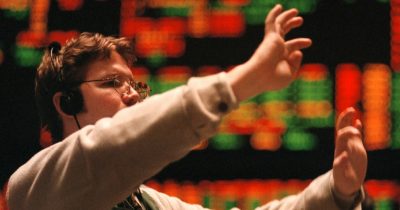
This evolution is visible in the way traders talk about the situation. The language has shifted from certainty to contingency. Phrases like "if the strait stays closed" and "assuming a quick resolution" now appear alongside more bearish scenarios. The market is effectively trying to hold two or three different futures in its head at once, and that is a difficult thing to do.
Why Predictions Are Hard
The difficulty is not a failure of analysis but a feature of geopolitical risk. Unlike a natural disaster or a corporate earnings miss, a disruption like this one involves actors with their own incentives, timelines, and red lines. A single statement from a government or a military maneuver can change the calculus overnight. That makes forecasting a moving target, and it means that even the most sophisticated models are working with incomplete information.
There is also the question of how other markets respond. Oil prices are the most obvious indicator, but the effects ripple through shipping rates, insurance premiums, currency markets, and even consumer confidence. Each of those channels has its own lag and its own feedback loops. The market's perception of the disruption is not a single number but a web of interconnected expectations, and that web is constantly being rewoven.
What to Watch
The next few days will likely bring more clarity, but also more noise. Traders will be watching for any sign of escalation or de-escalation, and they will be parsing every piece of news for its implications. The key question is whether the market's current pricing reflects the true risk or just the latest headline. That question may not have a clean answer, and the market may keep oscillating until the situation resolves one way or another.
For now, the Strait of Hormuz disruption has become a case study in the limits of prediction. The market has learned that geopolitical events do not follow a script, and that the best-laid plans can be upended by a single unexpected move. Whether that lesson sticks remains to be seen, but the process of learning it is already underway.