President Trump has signaled he's open to a deal with Iran, even as he warns that U.S. military strikes remain a live option. The two-pronged approach — part negotiation, part threat — could either ease years of hostility or push the two countries closer to the brink. Global markets are watching for which direction the wind blows.
A Two-Track Strategy
Trump's comments suggest he's not ready to abandon diplomacy, but he's also keeping force on the table. That's a calculated gamble. By hinting at interest in reaching an agreement, he leaves room for talks. By warning of possible military action, he signals that patience has limits.
It's a familiar playbook for this president, who has often paired tough rhetoric with offers to talk. The question now is whether Tehran takes the bait or calls the bluff. The facts are thin — no concrete proposals have been made public, no negotiating framework has been sketched out. But the intent is clear: Trump wants to be seen as willing to deal, but not from a position of weakness.
Stabilize or Destabilize?
The strategy carries real risk. It could work — a credible threat of force might push Iran back to the table and produce a new agreement, stabilizing a region that's been on edge for years. Or it could backfire badly. If Iran reads the threats as a prelude to attack, it might double down on its nuclear program or retaliate against U.S. interests in the region. That would destabilize relations even further.
There's no middle ground here. Either the dual track produces a diplomatic breakthrough, or it spirals into open conflict. The White House hasn't said which outcome it expects, and that ambiguity is itself part of the pressure campaign.
Markets on Edge
The uncertainty isn't confined to foreign policy circles. Any serious escalation between the U.S. and Iran would send shockwaves through global energy markets — the Strait of Hormuz, through which a fifth of the world's oil passes, sits right in the middle of any confrontation. Even without a shot fired, the mere threat of disruption can move prices.
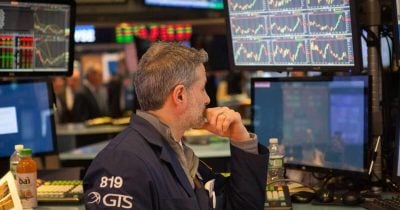
Traders are already factoring in the possibility of a strike, though no one can say with confidence which way the odds lean. The situation is fluid, and the signals from Washington are mixed. One day it's a deal, the next day it's a warning. That volatility is exactly what markets hate.
For now, the administration hasn't set a deadline for talks, nor has it defined what specific action would trigger a military response. That leaves the ball in Iran's court, and the world watching.