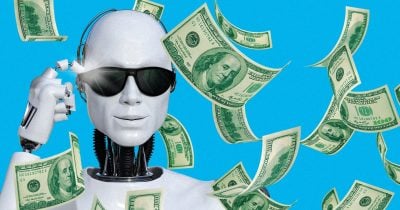
U.S. labor productivity picked up speed in the second quarter, driven by companies slashing costs through artificial intelligence. The gain marks a shift from recent years, when productivity growth lagged even as the economy expanded. But the trend carries a warning: AI-driven efficiency may boost corporate profits while eroding workers' buying power and overall consumer demand, a combination that could threaten economic stability.
What the data show
Productivity — the amount of output per hour worked — rose at a faster clip in the April-to-June period than in the first quarter, according to government figures. The acceleration came as firms invested in automation and AI tools to streamline operations, reduce labor costs, and maintain margins in a still-tight labor market. While the exact contribution of AI is hard to isolate, the timing aligns with a broader push by employers to adopt generative AI and other technologies.
The efficiency trade-off
Higher productivity is typically a good sign for an economy. It allows companies to produce more with less, which can lead to higher wages and lower prices. But the current wave of AI adoption is different. Many firms are using the technology to replace or augment workers rather than to expand output. That means the gains are flowing more to capital than to labor. If workers see their hours cut or wages stagnate, their ability to spend shrinks. Consumer demand, the engine of the U.S. economy, could weaken as a result.
Risks to the broader economy
The risk is that AI-driven productivity gains end up undermining the very demand that sustains growth. If too many workers lose income or bargaining power, the economy could face a drag that offsets the efficiency benefits. Policymakers and economists are watching closely. The Federal Reserve, for instance, has cited productivity as a key factor in its inflation outlook. A sustained productivity boom could keep inflation in check, but only if the gains are broadly shared.
What comes next
The next quarterly productivity report, due in the fall, will show whether the second-quarter acceleration was a one-off or the start of a longer trend. For now, the data offer a snapshot of an economy in transition — one where AI is reshaping the workplace, and the old rules about productivity and prosperity may no longer apply.