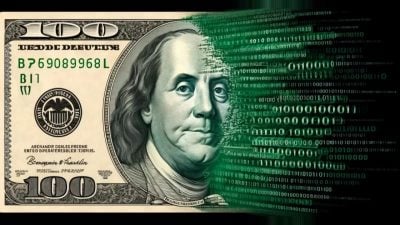
Federal Reserve Chair Warsh has pledged to hold the central bank's inflation target at 2%, even as the U.S. government's mounting debt threatens to undermine that commitment. The vow, made in his first public remarks since taking the helm, sets up a delicate balancing act between price stability and fiscal reality.
A promise under pressure
The 2% target has been the Fed's north star for years, guiding interest rate decisions and bond purchases. Warsh's reaffirmation is meant to signal continuity, but the math is getting harder. The national debt has ballooned to levels that make every policy move more consequential. When the Fed raises rates to cool inflation, it also raises the cost of servicing that debt. That creates a feedback loop the central bank can't ignore.
Warsh didn't mince words. He said the commitment to 2% is non-negotiable. But he also acknowledged the debt challenge could force the Fed to adjust its approach. The tension is real: the more aggressive the Fed is on inflation, the more pressure it puts on the government's finances. And if investors start to worry about the debt, they could demand higher yields, which would feed back into inflation.
The debt overhang
The U.S. government's borrowing needs have grown faster than the economy. That means the Fed's balance sheet decisions—whether to buy or sell bonds—have outsized effects on the Treasury market. A Fed that's seen as too hawkish could trigger a selloff in government bonds, pushing yields up and making the debt problem worse. A Fed that's seen as too dovish could let inflation run hot, eroding the value of that debt in real terms.
Warsh's challenge is to navigate between those two risks. He's made clear he won't abandon the 2% target, but the debt load could force him to tolerate higher inflation for longer than he'd like. That's a trade-off no Fed chair wants to make, but it may be unavoidable.
Policy at a crossroads
The implications go beyond interest rates. If the debt becomes a constraint on the Fed's independence, the central bank could find itself under political pressure to keep rates low. That would undermine the credibility of the inflation target, which relies on the Fed's ability to act without political interference. Warsh's vow is a signal that he intends to keep that independence, but the debt is a structural problem that won't go away with a few rate cuts.
For now, the Fed is in a holding pattern. The next policy meeting will be closely watched for any shift in language about the inflation target. Warsh has drawn a line in the sand, but the debt is a tide that could erode it.