Executive Summary
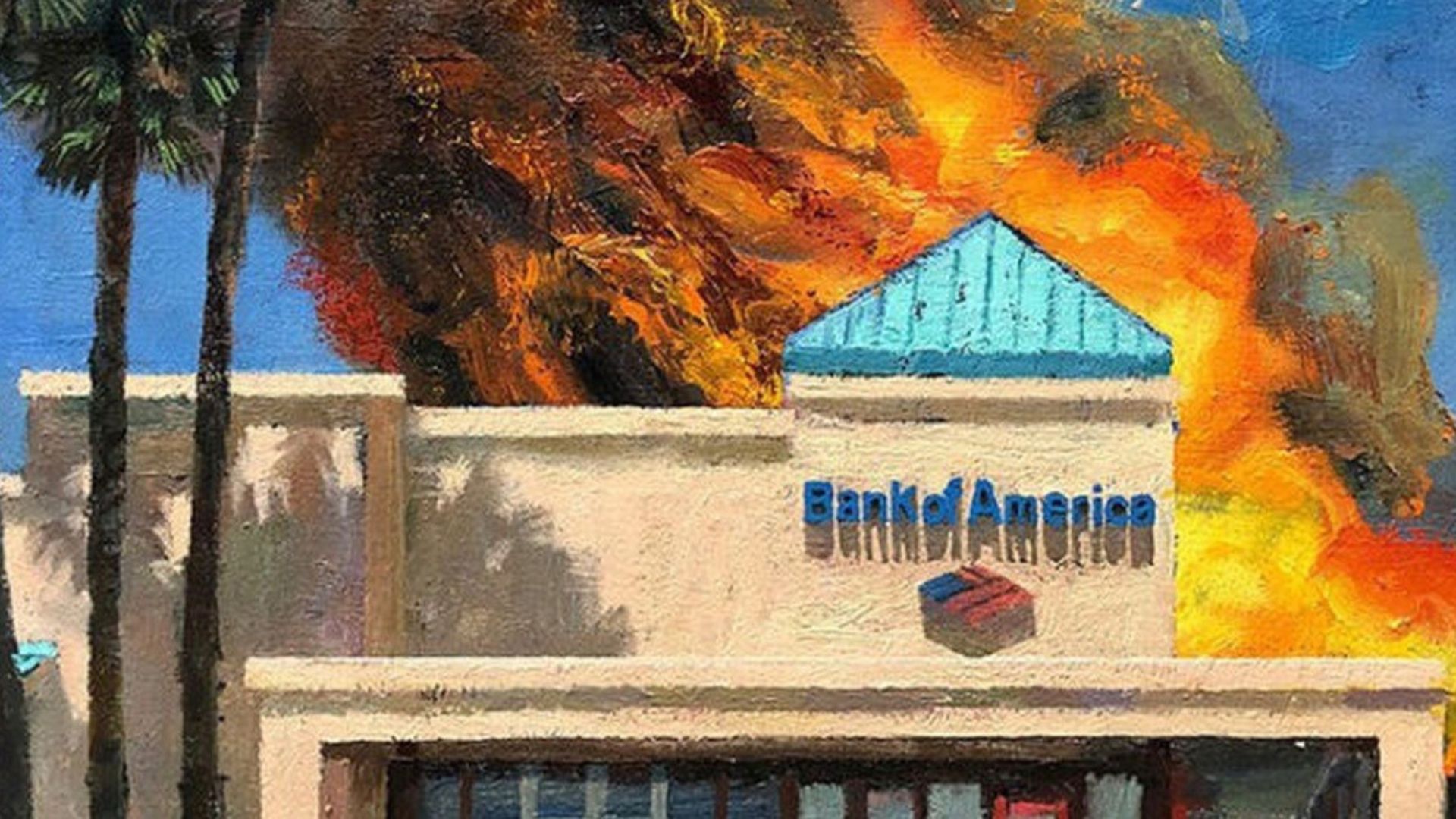
Los Angeles‑born artist Alex Schaefer’s 2011 “Banks on Fire” canvas depicting a Chase Bank branch in Van Nuys has sold on eBay for $25,200 to a collector in Germany. The sale, which closed this week, revives conversation about the series’ origins in the 2008 financial crisis and its unexpected resonance with the Bitcoin community.
What Happened
Earlier this week, an eBay auction for Schaefer’s 2011 Van Nuys painting concluded with a winning bid of $25,200. The buyer, identified only as a German collector, secured the work that shows a Chase Bank façade rendered in flames, painted en plein air on the sidewalk directly in front of the branch.
The auction listing highlighted the piece’s provenance, noting its place in Schaefer’s “Banks on Fire” series and its previous exposure in media coverage of the artist’s 2012 arrest for chalking “Crooks” on a downtown Chase logo. The sale price reflects the market’s growing appetite for politically charged art that intersects with cryptocurrency culture.
Background / Context
Alex Schaefer began the “Banks on Fire” series in 2009, setting up easels on sidewalks outside Chase Bank branches and painting the institutions as if they were ablaze. The series was born out of the 2008 financial crisis and the massive government bailouts that followed, a period Schaefer described as a “visual protest against unchecked financial power.”
In the summer of 2011, Schaefer installed his easel on a sidewalk in Van Nuys, California, and completed the now‑iconic painting of a Chase branch engulfed in flames. The work remained in his personal inventory until it entered the public eye through an eBay auction that attracted international attention.
Schäfer’s background blends traditional fine‑art training with digital experience. After studying at ArtCenter College of Design in Pasadena, he spent eight years as a digital artist, contributing to the original *Spyro the Dragon* video‑game trilogy. He later returned to ArtCenter as an instructor, teaching fundamentals of painting, drawing, and composition.
Law enforcement once questioned Schaefer about possible terrorist motives after his paintings depicted burning banks while the structures remained intact. The inquiry resulted in a misdemeanor vandalism charge in July 2012, when he was arrested for chalking the word “Crooks” next to a Chase logo. He spent twelve hours in jail before the case was resolved.
Since the series debuted, the Bitcoin community has drawn a symbolic link between Schaefer’s work and the Genesis Block’s embedded Times headline: “Chancellor on brink of second bailout for banks.” The parallel has turned the paintings into visual shorthand for the crypto narrative of challenging traditional finance.
Reactions
Art commentators note that the sale underscores a resurgence of interest in protest art that bridges the gap between finance and culture. One European gallery director, who declined to be named, described the purchase as “a statement piece for any collection that wants to capture the zeitgeist of financial dissent and crypto ideology.”
Within the Bitcoin community, the sale sparked discussions on social media platforms. Users highlighted the painting’s visual echo of the Genesis Block headline, interpreting the transaction as a form of “crypto‑curated patronage.” The buyer’s anonymity has only added to the mystique, prompting speculation that the collector may be a crypto enthusiast seeking a tangible representation of the movement’s anti‑bank sentiment.
Schäfer himself has not issued a public comment on the sale, but his past statements emphasize the series as a “mirror held up to the financial system.” The artist’s earlier willingness to confront banks directly—both on canvas and through street‑level activism—suggests that he views the transaction as a continuation of the dialogue rather than a commodification of protest.
What It Means
The eBay sale illustrates how art that critiques financial institutions can acquire new relevance when intersecting with digital currency narratives. By linking a physical canvas to the mythos of Bitcoin’s origin story, the transaction blurs the line between collectible art and cultural artifact.
For the broader crypto‑art market, the sale signals that collectors are willing to invest in works that carry both historical context and contemporary symbolism. The price point, while modest compared to high‑end contemporary sales, demonstrates a willingness to pay a premium for pieces that resonate with the ideological underpinnings of the crypto community.
From a cultural standpoint, the purchase may encourage other artists who explore financial critique to consider how digital‑native audiences interpret and value their work. It also reinforces the notion that protest art can find new life and financial viability when it aligns with emerging narratives—such as the decentralization ethos championed by cryptocurrencies.