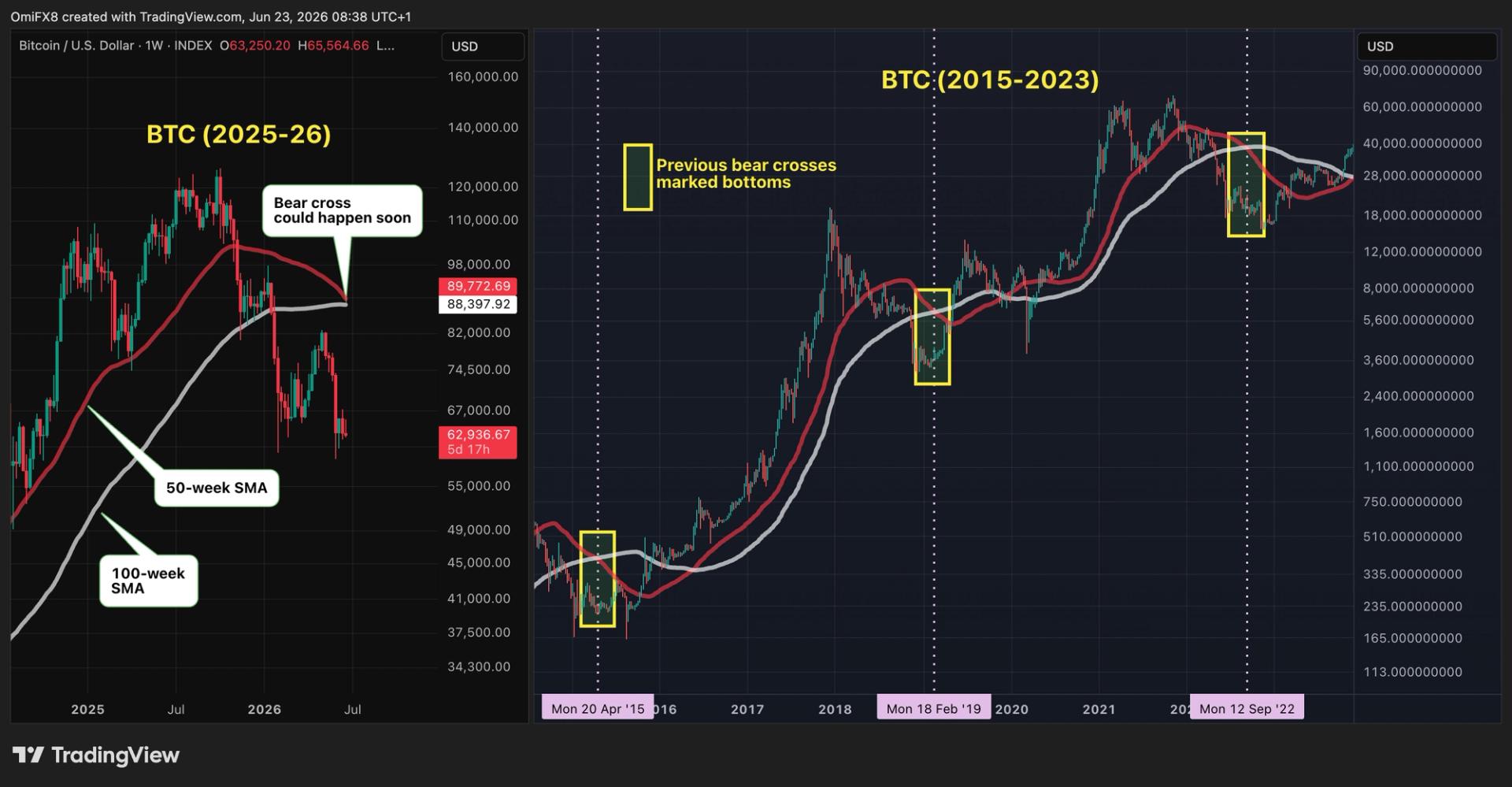
Bitcoin's slide back toward $63,600 this week has flipped a key altcoin season indicator, suggesting the nearly two-year downtrend for smaller tokens may be ending. The signal flashed as altcoins steadied after running out of sellers, according to market data. For investors who've watched bitcoin dominate while alts bled, this shift could finally mark the start of a rotation.
The signal that lit up
The altcoin season signal is a binary read — it's either on or off. Right now it's on, triggered directly by bitcoin's retreat. When BTC drops hard, capital often rotates into altcoins, but the setup this time is different: altcoins aren't just catching a falling knife. After nearly two years of grinding lower, the selling pressure has simply exhausted. Supply and demand have found a new balance.
Why the script flipped
Bitcoin's slide isn't a crash — yet. Losing ground from recent highs toward $63,600 is a notable retreat, but the real story is what altcoins have been doing. They stopped making lower lows weeks ago. The altcoin season signal captures that divergence: BTC slumps while alts hold. That pattern doesn't last forever. Typically, it either breaks into a broad selloff or a genuine rotation. This time, the signal says rotation.
What traders are watching
No one's calling a full-blown alt season yet. The signal is a warning light, not a siren. Traders will be watching whether bitcoin stabilizes or continues lower. If BTC finds a floor quickly, the altcoin rally could fizzle. But if sellers stay in control, the rotation could gain steam — and fast. The key level is simple: altcoins need to hold the ground they've taken.
What happens next
The next few sessions will tell the story. Bitcoin's move from here decides whether altcoins get a real season or just a dead-cat bounce. If BTC slides below $63,000 in a hurry, altcoins might get dragged down with it. But if the bottom holds, the signal says the long winter for alts is over — and the rotation has begun.