Executive Summary
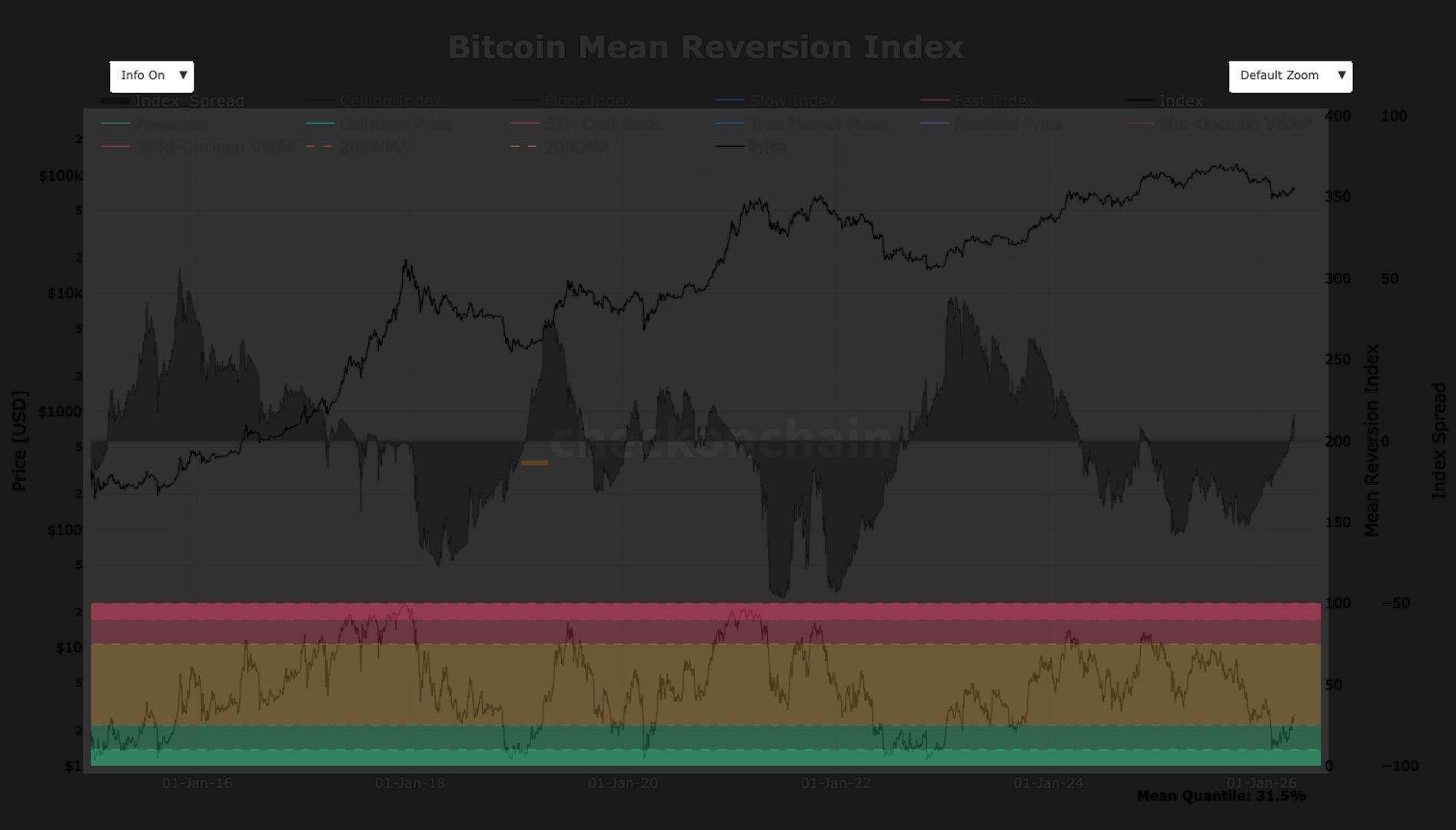
On April 27, 2026, a prominent crypto analyst warned that Bitcoin breaching the $40,000 mark would constitute a near‑unprecedented statistical outcome. The analyst’s mean‑reversion models place current bearish price targets at the 0.4th percentile, a level that dwarfs typical market pullbacks.
What Happened
The analyst, who tracks Bitcoin’s price dynamics for a leading market‑research firm, stated that a climb to $40,000 would be "near‑unprecedented" in statistical terms. The same research framework shows that bearish scenarios—prices projected below $30,000—sit at the 0.4th percentile of historical price moves, indicating an event far rarer than ordinary corrections that usually hover between the 5th and 20th percentiles.
Mean‑reversion calculations, which assume Bitcoin’s price oscillates around a long‑term equilibrium, produce a 0.4th percentile probability for the bearish tail. In plain language, the model suggests that a drop to the analyst’s lower target would happen once in roughly 250 similar market cycles, underscoring the extremity of that outlook.
While the analyst refrained from naming a specific timeline, the commentary arrived as Bitcoin traded just shy of $38,200, edging upward on the back of renewed institutional interest and a modest uptick in on‑chain activity.
Market Context
Bitcoin’s current price of $38,200 places it within 4.5% of the $40,000 threshold flagged as statistically rare. The 24‑hour price change sits at +0.8%, while the seven‑day momentum registers a +2.5% gain. Market capitalization hovers around $720 billion, and trading volume continues to outpace the 30‑day average, signaling heightened market participation.
Despite the bullish price movement, the Fear & Greed Index reads 55, indicating a neutral‑to‑slightly‑greedy sentiment among traders. On‑chain data shows a modest influx of Bitcoin onto exchanges, yet large‑holder (whale) wallets remain net accumulative, suggesting a clash between short‑term selling pressure and long‑term holding confidence.
Market Data Snapshot
Primary Asset: Bitcoin (BTC)
- Current Price: $38,200
- 24h Price Change: +0.8%
- 7d Price Change: +2.5%
- Market Cap: $720 Billion
- Volume Signal: High
- Market Sentiment: Neutral‑to‑Bullish
- Fear & Greed Index: 55 (Neutral‑to‑Greedy)
- On‑Chain Signal: Bullish
- Macro Signal: Mixed
Bitcoin’s dominance remains above 45%, and the hash‑rate continues to set new all‑time highs, reinforcing network security amid price volatility.
Market Health Indicators
Technical Signals
- Support Level: $36,500 – Strong
- Resistance Level: $40,000 – Weak (near‑unprecedented target)
- RSI (14d): 55 – Neutral
- Moving Average: Price above 50‑day MA, below 200‑day MA – Mixed
On‑Chain Health
- Network Activity: High
- Whale Activity: Accumulating
- Exchange Flows: Inflow
- HODLer Behavior: Strong Hands
Macro Environment
- DXY Impact: Negative (strong dollar pressures crypto)
- Bond Yields: Headwind (rising yields reduce risk‑on appetite)
- Risk Appetite: Mixed (institutional buying vs retail caution)
- Institutional Flow: Buying
Why This Matters
For Traders
The proximity to a statistically rare $40,000 level injects a fresh layer of risk management. Short‑term traders must weigh the probability of a breakout against the historically low likelihood of a move that deep into the tail of price distributions.
For Investors
Long‑term investors gain perspective on the extremity of bearish forecasts. The 0.4th percentile figure suggests that a plunge to the analyst’s lower target would be an outlier, reinforcing confidence for holders who view Bitcoin as a store of value over multiple market cycles.
What Most Media Missed
Most coverage emphasizes the headline $40,000 figure, but the underlying statistical analysis reveals that both extreme bullish and bearish outcomes sit far beyond ordinary market behavior. The mean‑reversion model’s 0.4th percentile metric quantifies just how rare a deep correction would be, a nuance absent from many surface‑level reports.
What Happens Next
Short‑Term Outlook
In the next 24‑72 hours, price action will likely test the $40,000 resistance. A decisive break could trigger fresh buying, while a rejection may push the market back toward the $36,500 support.
Long‑Term Scenarios
If Bitcoin sustains above $40,000, the statistical rarity narrative may shift, attracting new institutional capital and nudging sentiment toward greed. Conversely, a slide below $36,000 would validate the analyst’s bearish tail, but such a move remains a 0.4th percentile event, implying a low probability under current conditions.
Historical Parallel
The 2017 rally to $20,000 exhibited a similar statistical outlier perception, yet the market ultimately forged a new higher equilibrium. Observers will watch whether the $40,000 milestone repeats that pattern or remains an isolated statistical footnote.