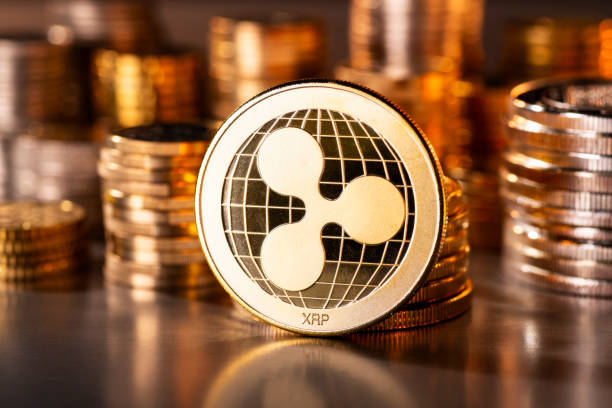
Financial analyst CharuSan forecasts XRP could surge to $300 if the Digital Asset CLARITY Act becomes law, arguing the legislation would unlock banks' ability to use XRP as a global settlement asset through its required infrastructure scale. The report ties this potential to XRP's existing 61.7 billion token supply, which the analyst says is mathematically necessary for handling trillion-dollar transfers. Without the act's passage, current regulatory uncertainty remains the key barrier to widespread banking adoption.
XRP's Supply Advantage
CharuSan's analysis emphasizes XRP's circulating supply of 61.7 billion tokens as essential for processing massive cross-border transactions, positioning it differently from rival RLUSD's 1.5 billion token supply. The report states global banking volumes demand this scale to avoid system bottlenecks during high-volume periods. Smaller supplies would force frequent token reissuance, creating operational headaches banks want to avoid when moving billions daily.
Ripple's Banking Network Access
Ripple's partnerships with Volante, ACI, FINASTRA, and Worldwide give thousands of connected banks instant liquidity access without individual contracts. This infrastructure means banks can integrate XRP settlement capabilities through existing channels rather than building new pipelines. The network effect becomes critical when moving trillions annually across time zones and currencies.
Price Volatility Threshold
The analyst warns XRP priced below $100 would trigger volatility and payment bottlenecks, comparing it to forcing an ocean through a small straw. At lower prices, the same transaction volume would require moving far more tokens, overloading settlement systems. Higher pricing reduces the token count needed per transaction while maintaining sufficient liquidity depth for bank-scale operations.
Debunking RLUSD Replacement Claims
Critics asserting RLUSD will replace XRP for settlements fundamentally misunderstand institutional banking infrastructure requirements, according to the report. The analysis shows RLUSD's smaller supply and different liquidity mechanics make it unsuitable for the trillion-dollar volume where XRP's scale becomes non-negotiable. Banks won't adopt assets that can't handle peak transaction loads without system strain.
Congressional committees will reconvene next week to review amendments to the Digital Asset CLARITY Act, with a vote expected before quarter-end.