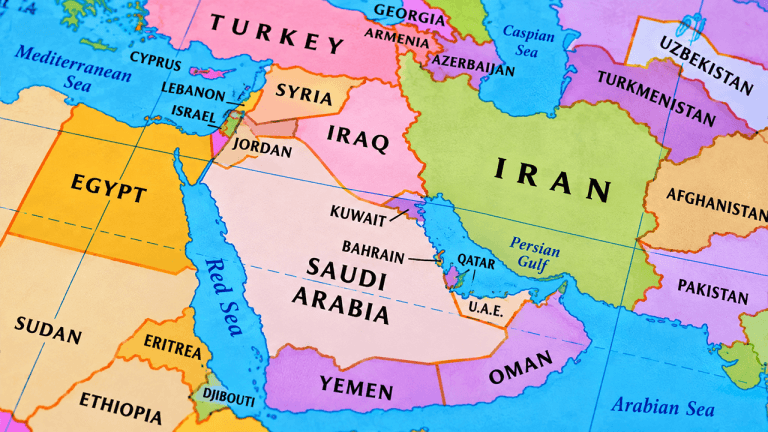
Bahrain's military intercepted a wave of missiles and drones this week, as the simmering Gulf conflict erupted into direct exchanges. The interception, confirmed by Bahraini officials, marks a significant escalation in a regional standoff that is now spilling into global financial markets — including crypto.
Missiles over Bahrain
On Wednesday, air defense systems engaged multiple incoming projectiles over the island kingdom. No casualties were reported, and the military said it successfully neutralized the threat. But the attack underscores how quickly the Gulf crisis is broadening. Bahrain, a key U.S. ally and home to the U.S. Navy's Fifth Fleet, has been drawn into a conflict that until recently was mostly confined to maritime skirmishes and proxy strikes.
The interception came hours after Iran launched a coordinated drone and missile salvo toward Israeli territory, according to regional reports. Bahrain's involvement suggests the conflict is no longer a two-state affair — it's a regional firestorm.
Oil jitters spill into crypto
For crypto traders, the immediate worry is oil. The Gulf region pumps about a third of the world's crude. Any disruption to shipping lanes or production facilities sends oil prices higher, and that tends to rattle risk assets — including Bitcoin and Ethereum. This week, Brent crude spiked above $90 a barrel for the first time since 2024, and crypto markets followed with a sharp sell-off.
Bitcoin dropped below $60,000 on Thursday morning before recovering slightly. Altcoins took a heavier hit. The correlation between oil and crypto isn't perfect, but when geopolitical risk surges, traders often flee to cash or gold. Crypto, still viewed by many as a risk-on bet, gets caught in the downdraft.
The timing isn't great. The market was already digesting the aftermath of the German government's Bitcoin sales and uncertainty around U.S. interest rates. Now it has a full-blown Middle East crisis to price in.
What traders are watching
The key question is whether the conflict escalates further. If Iran or its proxies target Gulf oil infrastructure — or if the Strait of Hormuz gets squeezed — the economic fallout could be severe. Crypto exchanges in the region have reported higher trading volumes and some withdrawal delays as users move funds to perceived safe havens.
For now, the market is in wait-and-see mode. The next few days will show whether this is a short-term panic or the start of a prolonged risk-off period. One thing is clear: the Gulf conflict is no longer a regional story. It's a global market event, and crypto is right in the middle of it.