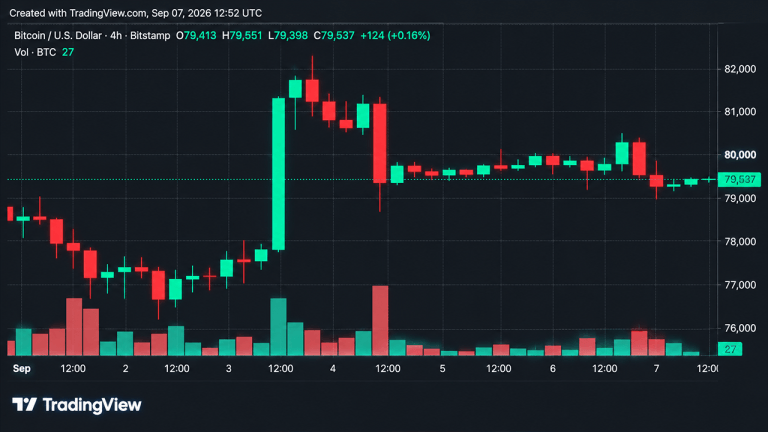
Bitcoin's four-year cycle isn't dead — it just looks different this time. That's the argument from analyst Benjamin Cowen, who this week laid out a case that the current market top, now roughly 1,162 days from the 2022 low, landed within a week of the historical average. Cowen predicts the next cyclical bottom will land in October 2026, and he's not buying the idea that spot ETFs, corporate treasury demand, or a strategic reserve narrative have broken the pattern.
Why the timing still works
Cowen points out that prior cycle peaks hit at day 1,059 and day 1,168. At day 1,162, this cycle's top is essentially in the same window. That alone, he argues, undercuts the notion that the four-year rhythm has been disrupted. Bitcoin trades near $75,650 — down roughly 40% from its record of $126,080 — and Cowen expects further downside before any durable bull market resumes.
The 'apathy' objection doesn't hold
Critics have said this cycle topped on apathy, not euphoria, breaking the historical pattern. Cowen counters by citing S&P 500 data from 1962 to 1982, a period where markets also topped on indifference. It still led to a bear market. His point: the emotional tone of the top doesn't determine whether a downturn follows. The current counter-trend rally, he notes, is weaker than the 46% bounce off the 2022 low and sits within the 15-25 week range of prior midterm-year recoveries.
What October 2026 could look like
Cowen's base case for the cycle low lines up with midterm-year patterns seen in 2014, 2018, and 2022. He expects Bitcoin to revisit $60,000 before any real uptrend takes hold. Even in a softer outcome, the path points lower through the rest of this year. That means the next few months could test the patience of anyone hoping the ETF inflows or corporate buying would short-circuit the normal rhythm.
The bottom line
Cowen's forecast rests on a simple premise: the four-year cycle has been consistent for over a decade, and the data so far doesn't justify breaking with it. The real test comes in Q4, when the predicted low either materializes or doesn't. Until then, the pattern that's held since 2014 remains the working model.