Benjamin Cowen has released a new Bitcoin price model that formalizes the idea of 'diminishing reflexivity' — the tendency for each boom cycle to deliver smaller percentage gains. The paper, published under the title 'Asymmetric Tail Curvature in Bitcoin Price Quantiles,' is based on 16 years of daily data through May 2026. It introduces a statistical bound on Bitcoin's upside, predicting the next cyclical bottom in October 2026.
What the curvature data shows
The model zeroes in on tail curvature in Bitcoin's price distribution. Upper-tail curvature measures roughly -0.33 — meaning the right tail bends downward in a statistically significant way. Lower-tail curvature sits near -0.02 and is not distinguishable from a flat line. That asymmetry is significant at the 1% level, Cowen writes. In practical terms, the model's upper quantile bands flatten over time while lower structural support stays linear. That suggests speculative peaks are getting compressed even as the floor rises steadily.
How it stacks up against older models
Cowen benchmarked his approach against three well-known models. The original power-law model overshot actual prices on 77.2% of trading days, with an average error of 32.1% above the real price. PlanB's stock-to-flow model was even worse: it overshot on 94.9% of days, averaging 294.5% above reality. The S2FX cross-asset variant was the most extreme, overshooting by a staggering 1,699% — implying Bitcoin would need to be above $5 million to fit its curve. Cowen's model avoids that kind of drift by design.
Caveats and the October call
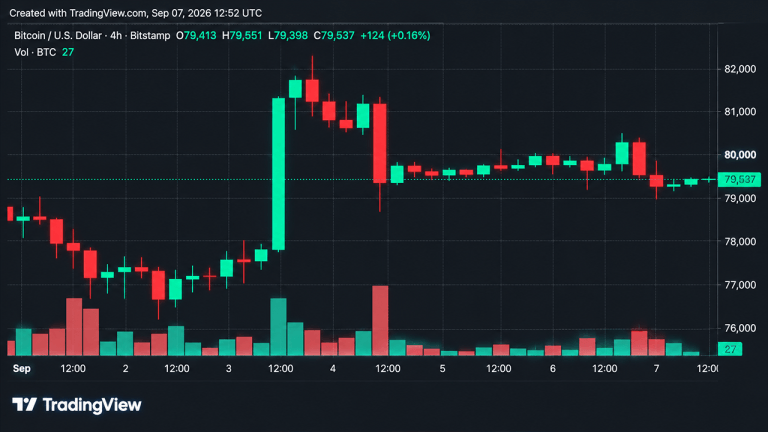
The paper is careful to flag its own limitations. Only four halving cycles exist, so the sample is small. The results are sensitive to the anchor date: shifting from January 2009 to January 2010 makes the upper-tail curvature nearly zero. There are also functional-form concerns — negative curvature in log-log space doesn't have a literal infinite interpretation. Still, Cowen sticks with the 4-year cycle pattern and predicts the next price bottom in Q4 2026, specifically October. Bitcoin currently sits just below $70,000, having lost about 4% in the past 24 hours. Whether October holds up as the floor — or the model's own caveats prove more decisive — is the open question.