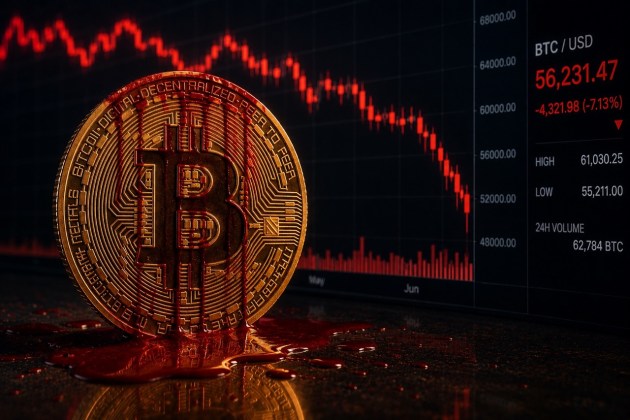
Bitcoin managed to claw back above $62,000 after dipping below $59,000 this week, but the relief rally hasn't changed the broader bearish tone among analysts. Weak demand and cautious sentiment are keeping the market fragile, and one analyst is warning that a deeper drop — potentially as much as 25 to 28 percent — is still on the table.
Why the bounce might not last
The move back above $62,000 follows a decisive break of the $60,000–$63,000 support range. That break matters because it was a zone that had held for weeks. Now that it's gone, analysts remain bearish on bitcoin despite the short-term recovery. The question isn't whether the price will fall again, but how deep the next leg down goes.
Analyst Aralez offered a specific path: a short-term bounce to $71,000, followed by an impulsive sell-off that could take the price to $46,000–$48,000. That would represent a roughly 25–28% decline from current levels above $62,000. Aralez didn't put a timeline on it, but the forecast suggests the bounce could be short-lived.
What a drop to the mid-40s would mean
A decline to $46,000–$48,000 wouldn't just be a correction — it would likely trigger a slow bottom formation process. History suggests that kind of reset can clear out leveraged positions and shake weak hands. The eventual bottom would, in theory, set the stage for an accumulation phase that could fuel a more sustainable rally later.
But that's a while off. For now, the market is stuck in a cautious mood. Trading volumes haven't picked up, and there's no clear catalyst on the horizon to reverse sentiment.
Fragile conditions, limited upside
The broader problem is that demand isn't there. Bitcoin has struggled to hold gains, and each rally attempt has been met with selling. Even the dip below $59,000 didn't trigger a strong buying wave — the rebound was tepid, at least relative to what some traders expected. Without a serious shift in sentiment or a fundamental catalyst, the path of least resistance appears to be lower.
The next few days will be telling. If bitcoin can't hold $62,000 and slips back toward $60,000, the probability of revisiting the mid-$50,000s — or worse — goes up fast.