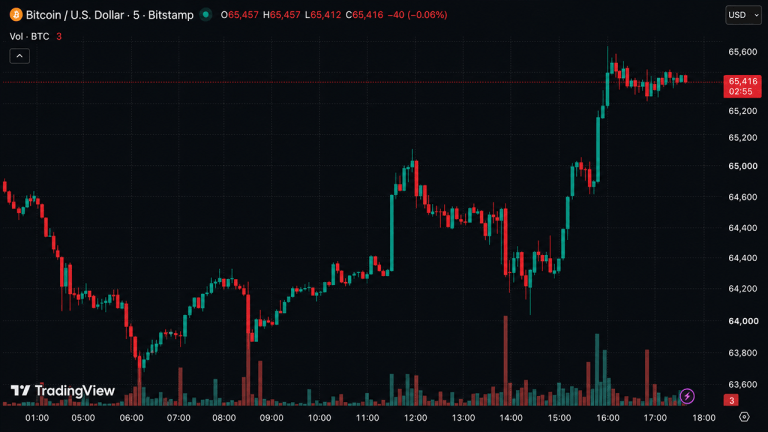
Bitcoin ETF inflows finally turned positive after eight straight weeks of withdrawals, with $273 million entering U.S. spot Bitcoin ETFs over the two weeks ending July 17 and the prior week. But the rebound is modest — it replaces only about 3% of the more than $8 billion investors pulled during the outflow streak. And a fresh headwind is building: oil prices surged above $91 a barrel after U.S. Central Command launched strikes against Iran on July 20, disrupting shipping through the Strait of Hormuz.
ETF inflows: a trickle, not a flood
The two-week inflow was concentrated in two products. BlackRock's iShares Bitcoin Trust took in $204 million, and Grayscale's Bitcoin Mini Trust also saw net additions. Other funds, including Fidelity's, continued to see outflows. Meanwhile, stablecoin reserves on major exchanges have drained $2.3 billion in liquidity, limiting the dry powder available for a Bitcoin breakout. Bitcoin has stabilized near $64,000–$65,000, but the capital base to push higher is thinner than it was two months ago.
Oil spike threatens to keep the Fed cautious
The U.S. strikes targeted Iranian military command centers, air-defense systems, maritime capabilities, and missile positions. No liquefied natural gas tanker has crossed the Strait of Hormuz since Thursday, and overall vessel traffic has collapsed — only four ships transited on Sunday. Higher oil prices risk reviving inflation, which could keep the Federal Reserve's policy restrictive for longer. That would reduce Bitcoin's upside, since loose monetary conditions have historically been a tailwind for risk assets.
Simon-Peter Massabni, head of business development at XS.com, noted that softer inflation data had recently reduced concerns about restrictive policy. But the oil surge, he said, could reverse those expectations. The timing isn't great: just as ETF flows turned, a geopolitical shock is testing the macro narrative.
The key question is whether the oil rally sticks. If it does, inflation expectations could rise, pushing the Fed to hold rates higher for longer. That would likely cap Bitcoin's recovery, keeping it rangebound even if ETF inflows continue. For now, the market is watching the Strait of Hormuz — and waiting to see if the two-week inflow streak can survive a new inflationary scare.