Bitcoin’s supply in loss has climbed to 40.6% — meaning more than two out of every five coins are now held at a price below their purchase cost. The metric has historically been a reliable marker for cycle bottoms, but the current reading still sits just shy of the descending trendline that has defined every major floor since 2015.
What the Supply-in-Loss Metric Shows
The supply-in-loss indicator tracks the percentage of circulating Bitcoin that was last moved at a price higher than the current market value. Since 2015, each successive cycle bottom has required a lower percentage than the one before. Early cycles needed more than 60% of supply in loss to form a floor; the 2018–2019 and 2020–2022 cycles saw progressively lower thresholds. The descending trendline for those bottoms now sits in the high-40% area — meaning the current 40.6% reading is close but not quite there.
Price Action and Key Levels
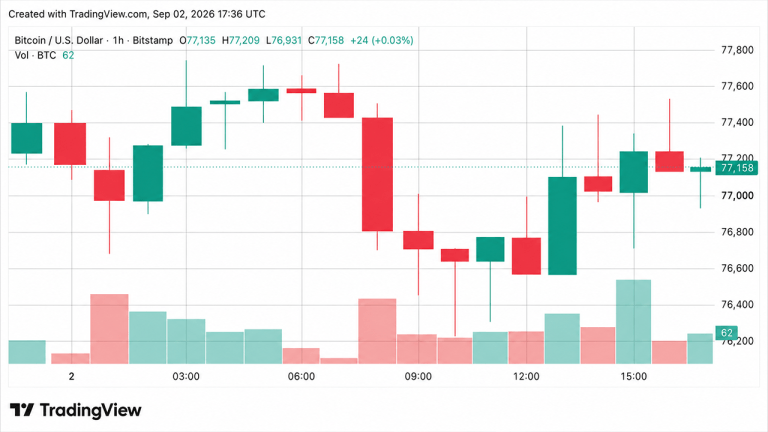
Bitcoin is trading near $69,600 on the weekly timeframe, having lost the critical $72,000–$75,000 support region. The weekly chart shows a rejection from $82,000, establishing a lower high relative to the cycle peak near $123,000 — a pattern that reinforces the downtrend in place since late 2025. Price has also fallen below both the 50-week and 100-week moving averages, which are starting to flatten. The next major weekly support sits between $64,000 and $66,000, a zone that served as a key accumulation range after February’s capitulation event.
The Key Support Zone
That $64,000–$66,000 band is now the most important line in the sand. If Bitcoin holds there, it could form the kind of lower-low that historically precedes a new accumulation phase. If it breaks, the supply-in-loss metric would likely push past 40.6% and into the high-40% area where past cycle bottoms have formed. Either way, the on-chain data says we’re in the neighborhood of a potential floor — but not quite at the door.