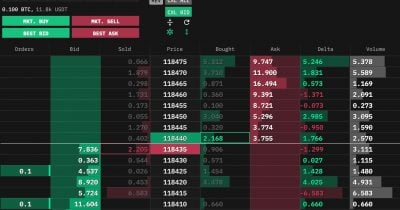
The Commodity Futures Trading Commission has approved the first onshore Bitcoin perpetual contract, opening a popular offshore derivative product to US customers under federal oversight. The move marks a shift in how the agency treats crypto derivatives — and gives traders a regulated alternative to the offshore venues that have dominated perpetual trading for years.
What a perpetual contract is
Perpetual swaps are a type of crypto derivative that behave like futures but have no expiration date. Traders can hold positions indefinitely, paying or receiving a funding rate every few hours to keep the contract's price close to the spot market. The mechanism is widely used on offshore exchanges like Binance and Bybit, but until now no US-regulated venue could offer it.
Why the CFTC approved it now
The agency has been tightening oversight of crypto derivatives after a series of enforcement actions against unregistered platforms. Approving a regulated perpetual product gives US-based traders a compliant route to trade what was previously only available through offshore proxies. The decision also signals that the CFTC views perpetuals as a legitimate hedging and trading tool, not a regulatory loophole.
What the approval means for US traders
For the first time, US residents can trade Bitcoin perpetuals on an exchange that reports to the CFTC. That brings margin requirements, position limits and trade surveillance into the picture — protections that don't exist on unregulated offshore markets. The product is cash-settled, so traders never hold the underlying Bitcoin. That structure is familiar to anyone who has traded CME Bitcoin futures, but with the added flexibility of no expiry.
What happens next
The approved exchange will need to launch the product and set initial margin and fee schedules. Perpetual traders accustomed to 100x leverage offshore will likely face much lower limits under CFTC rules. The agency has not said whether it plans to approve similar products from other exchanges, but the precedent is now set.