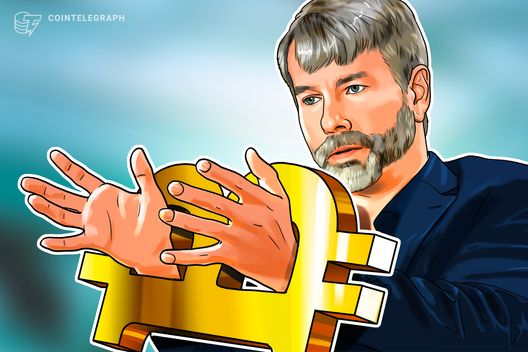
Coinbase CEO Brian Armstrong said Thursday that the intensifying economic competition between the United States and China might be the best thing to happen to America since the Cold War. Speaking in a context of rising tech rivalry, Armstrong argued the pressure will force the U.S. to return to excellence.
A Cold War Analogy for the 21st Century
Armstrong's comparison to the Cold War — a decades-long geopolitical standoff that spurred massive U.S. investment in science, defense, and infrastructure — is striking. The Cold War era produced the space race, the internet's early backbone, and a wave of federal research funding. By invoking that period, Armstrong is suggesting the current US-China competition could similarly galvanize American innovation and policy focus.
He didn't elaborate on specific areas where the U.S. needs to improve. But his comment lands at a moment when Washington and Beijing are locked in battles over semiconductors, artificial intelligence, and critical mineral supply chains. Both governments have rolled out industrial policies — the CHIPS Act in the U.S., massive state-backed tech investments in China — that some see as a new technological sprint.
Why the Message Matters
Armstrong leads the largest cryptocurrency exchange in the United States, a company that has faced its own regulatory battles with the Securities and Exchange Commission. His framing of the US-China rivalry as a positive catalyst comes as crypto policy remains a dividing line between the two superpowers. China has banned most crypto trading and mining, while the U.S. debates how to regulate the industry. Armstrong's remarks suggest he sees the competition not as a threat to crypto but as a reason for the U.S. to sharpen its edge — presumably including in digital assets.
The statement echoes themes Armstrong has raised before. He has called for clearer U.S. crypto rules to prevent talent and capital from flowing overseas. The cold-war analogy is his most direct attempt to frame the rivalry as a motivation, not a drag.
Armstrong didn't mention any specific policy change or company initiative. He offered only the macro view: that external pressure can renew American dynamism. Whether the U.S. political system can respond with the urgency of the Cold War years is an open question. The Cold War lasted four decades and required sustained bipartisan consensus. Today's political climate is far more fragmented.