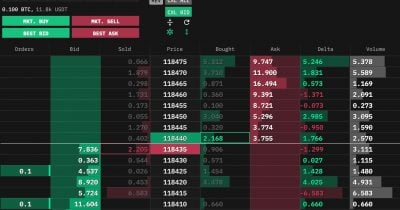
Coinbase will roll out perpetual-style equity index futures in the United States starting June 8, the company announced this week. The product lets traders take long or short positions on broad equity sectors and market trends using a perpetual futures structure borrowed directly from crypto derivatives. It's the first time a major US crypto exchange has offered this kind of tradable product tied to traditional stock indices.
How the perpetual structure works
Unlike standard futures that expire on a set date, perpetual futures use a funding rate mechanism to keep the contract price anchored to the underlying index. Coinbase's new equity index futures work the same way — traders can hold positions indefinitely as long as they maintain margin. The structure is familiar to anyone who's traded Bitcoin or Ethereum perpetuals on exchanges like Binance or Bybit, but applied here to sectors like tech, energy, or the broader S&P 500.
That means retail and institutional clients on Coinbase can now hedge or speculate on traditional market moves without rolling contracts every month. The exchange has not yet disclosed which specific indices will be available at launch, though the announcement pointed to “equity sectors and market trends” as the initial focus.
Coinbase's push beyond crypto
The move is the latest in Coinbase's years-long effort to bridge crypto and traditional finance. The exchange already offers spot crypto trading, custody, staking, and a derivatives platform regulated by the CFTC. Adding equity index futures brings it into more direct competition with traditional brokers like Interactive Brokers and TD Ameritrade, as well as crypto-native derivatives platforms that have long listed synthetic stock products offshore.
Timing matters. Regulatory clarity around crypto derivatives in the US has improved over the past year, and Coinbase holds a designated contract market (DCM) license through its acquisition of the FairX exchange in 2022. That license allows it to list futures products under CFTC oversight — including these new perpetual-style contracts.
What's different from crypto perpetuals
The core mechanism — no expiry, funding rate, mark price — is identical. But the underlying is an equity index, not a digital asset. That means settlement is in cash, and the contracts are subject to traditional market circuit breakers and position limits. Coinbase will also need to manage compliance with SEC and CFTC rules around index composition and manipulation prevention. The exchange hasn't detailed its funding rate formula yet, but typical crypto perpetuals adjust every eight hours; equity versions may follow a similar cadence.
One open question: how deep will liquidity be? Crypto perpetuals thrive on 24/7 trading and global participation. Equity index markets are mostly active during US hours. Coinbase will need to attract market makers willing to quote tight spreads even when stock markets are closed.
The launch date and what comes next
The product goes live on June 8. Coinbase says it will release more details on contract specifications, margin requirements, and eligible indices in the days before launch. For now, traders can start setting up accounts and funding collateral. If the offering gains traction, it could open the door to single-stock perpetuals or sector-specific products down the line — but that depends on whether the regulator signs off on the first batch.