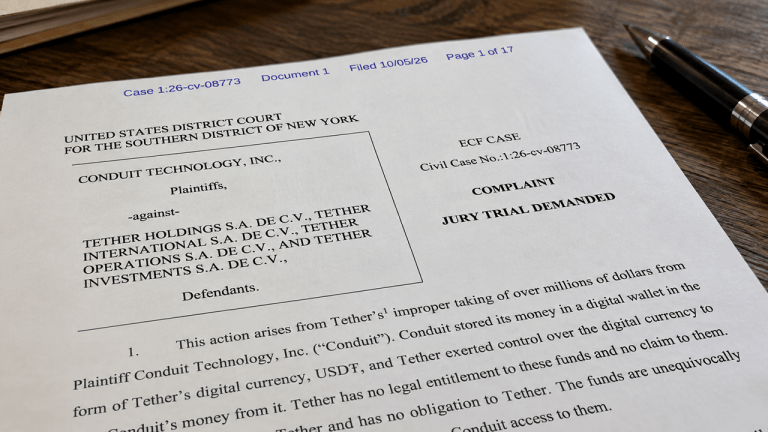
Payments company Conduit has filed a lawsuit against Tether, the issuer of the USDT stablecoin, after $2.76 million in the token was frozen and remains inaccessible. Conduit is asking a court to force Tether to restore access to its treasury wallet, saying the freeze has cut into its working capital and slowed settlements for its clients.
The freeze that locked up Conduit’s treasury
According to the complaint, the funds were held in a Conduit treasury wallet when Tether froze the USDT. The suit does not specify the exact date of the freeze or the reason Tether gave, if any. What’s clear is that the $2.76 million — a little over two and three-quarter million dollars in a stablecoin designed to trade at parity with the US dollar — is stuck.
Conduit says it needs that money back. The company describes the frozen funds as part of its operating treasury, not a speculative pot. Without access, Conduit claims it has less liquidity to move money for clients, and that settlement times have stretched as a result.
Why Conduit says the clock is ticking
For a payments firm, working capital isn’t a cushion — it’s the engine. Conduit’s filing argues that the missing $2.76 million has directly affected its ability to clear client transactions on schedule. The lawsuit doesn’t put a dollar figure on the slowdown, but it frames the freeze as an operational problem, not just a balance-sheet one.
That framing matters. Tether has frozen USDT before, often in response to law enforcement requests or security incidents. Those freezes are typically announced after the fact, and the company has publicized its cooperation with authorities. But Conduit’s suit suggests a different narrative: a business caught in the middle, with no clear path to unfreeze its own money.
What Tether hasn’t said
Tether has not publicly commented on the Conduit lawsuit as of this writing. The company’s terms of service give it broad discretion to freeze tokens, a power it has exercised in cases tied to hacking, sanctions, and other investigations. Whether Tether believes Conduit’s wallet was connected to any such matter is unknown. The lawsuit, for its part, doesn’t allege that Tether acted illegally in freezing the funds — it seeks restoration of access, not damages.
Still, the case raises a question that stablecoin holders have asked for years: if your USDT gets frozen, what’s the appeals process? For Conduit, the answer so far is a courtroom.
The legal ask
Conduit is seeking a court order requiring Tether to restore access to the treasury wallet. That’s a narrow request compared with a damages claim. If granted, it would force Tether to release the specific $2.76 million in USDT back to Conduit’s control. The suit does not ask for compensation beyond that, at least not in the facts available.
Where the case was filed, which court has jurisdiction, and when the first hearing might happen are all details that haven’t been made public yet. Tether is headquartered in the British Virgin Islands and has faced legal action in multiple jurisdictions, but this particular complaint’s venue isn’t specified in the initial reporting.
What happens next
Conduit’s clients — the businesses waiting on settlements — are the ones feeling the slowdown described in the filing. Until a judge rules or Tether acts voluntarily, the $2.76 million stays put. The next concrete step is Tether’s response to the complaint, which will either explain the freeze or set up a court fight over how much control a stablecoin issuer really has over the tokens it mints.
For now, the money is frozen, the lawsuit is filed, and Conduit is waiting.