Changpeng Zhao, the founder of Binance, said this week that storing crypto on exchanges is statistically safer than holding it in self-custody — a claim he backed with data from on-chain analyst Willy Woo. But Zhao also acknowledged the numbers aren't perfect, and that a middle ground is probably the smartest move for most investors.
The numbers behind the claim
Woo's data, pulled from a December 2025 report, shows that roughly 1.57 million Bitcoin have been lost from self-custody setups, compared to 1.51 million Bitcoin lost from exchanges. That works out to 1.3% of all Bitcoin versus 1.2%, respectively — a narrow gap that tilts slightly in favor of exchanges. Zhao pointed to those figures as evidence that the popular narrative — 'not your keys, not your coins' — might oversimplify the real risk picture.
Caveats and missing context
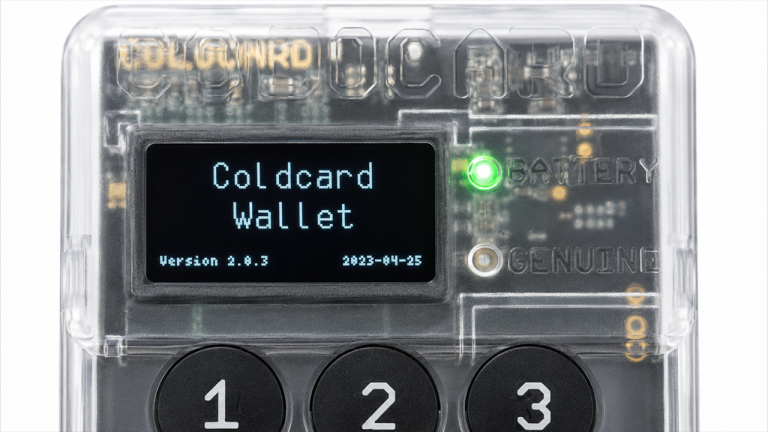
Zhao was quick to note that the data has blind spots. Hack losses are easier to track on the exchange side because major breaches make headlines, while self-custody losses — lost seed phrases, hardware wallet failures, forgotten passwords — often go unreported. The December 2025 report also doesn't account for more recent incidents, including the Coldcard hack. And yes, Zhao admitted, some exchanges that have since collapsed do skew the numbers against the exchange side. But he argued that Binance and a handful of other platforms have always covered user losses from exchange-side hacks, which changes the calculus for their customers.
The balanced take
Despite making the statistical case for exchanges, Zhao didn't go all-in. He said a balanced approach — splitting holdings across multiple custodians — is 'probably best.' That's a softer landing than a full-throated endorsement of centralized storage, and it reflects the reality that no single method is bulletproof. For now, the debate between self-custody and exchange storage remains unresolved, but Zhao's data-driven argument adds a new layer to a conversation that often runs on gut feeling.