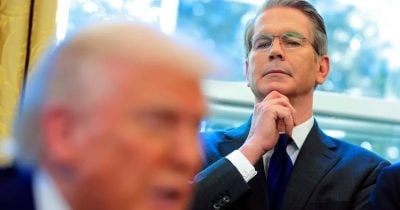
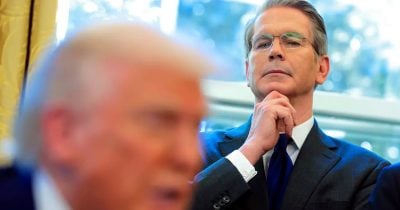
The U.S. House Oversight Committee formally opened an investigation into event-market platforms Polymarket and Kalshi on May 22, 2026, demanding detailed records on how both companies verify users' identities, enforce geographic restrictions, and monitor for market abuse. The committee set a June 5 deadline for the documents, signaling a bipartisan push for tighter oversight of a sector that has grown rapidly around U.S. elections and economic data releases.
What the committee wants to see
In letters sent to both firms, investigators asked for internal policies and logs related to know-your-customer (KYC) checks, location-blocking tools, and trade-surveillance systems. The requests cover everything from how the platforms screen users in restricted jurisdictions to how they detect wash trading, spoofing, or coordinated manipulation. Neither company has publicly commented on the probe, but both are expected to comply ahead of the June 5 deadline.
Chainalysis integration and on-chain monitoring
Polymarket had already taken steps to upgrade its compliance machinery. On April 30, the platform announced a partnership with blockchain analytics firm Chainalysis to deploy on-chain market-integrity tools. Those tools include anomaly-detection models designed to flag manipulation patterns and behavior that resembles insider trading. The move came as event markets attracted deeper liquidity this year, particularly around major macro prints and election cycles.
Academic findings on suspicious accounts
Separately, a set of preprints posted to arXiv in May 2026 added fuel to concerns about platform integrity. Researchers identified a persistent cohort of roughly 3.14% of accounts that consistently outperformed the market—so-called “skilled winners.” The same study flagged about 1,950 accounts using lifecycle heuristics that suggested possible manipulation or coordinated activity. The authors did not name specific platforms, but the data drew on public blockchain records common to event-market systems.
The findings don't prove wrongdoing, but they underscore the challenge platforms face in distinguishing genuine skill from abusive strategies. The committee's request for trade-surveillance records suggests lawmakers are paying attention to exactly that question.
Broader market context
The probe arrives at a moment when event markets are no longer a niche experiment. Liquidity has deepened, particularly around U.S. economic indicators and electoral outcomes, and operators have responded with increased investment in surveillance systems and oracle governance. Both Polymarket and Kalshi have expanded their offerings beyond political contracts into financial events, weather derivatives, and even sports outcomes.
Yet the regulatory landscape remains fragmented. The Commodity Futures Trading Commission has taken an interest in some event contracts, but the House Oversight Committee's involvement signals that Congress may be preparing broader legislation. The June 5 deadline for records will give lawmakers a much closer look at how these platforms actually run—and where they may be falling short.