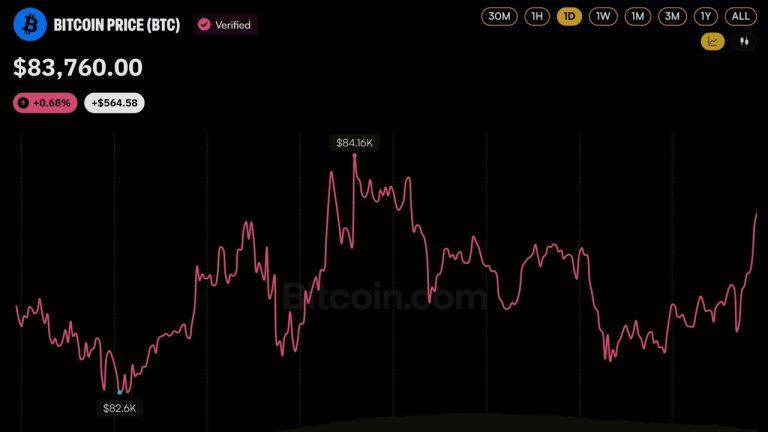
Institutional investors now account for 72% of all crypto trading volume, a record high that signals Wall Street's deepening grip on digital asset markets. The shift is bringing stability but also tying crypto's fate more closely to traditional finance, making it increasingly vulnerable to macroeconomic shifts and regulatory changes.
The 72% threshold
The figure marks a steady climb from just a few years ago, when retail traders dominated the space. Today, nearly three out of every four dollars moving through crypto exchanges come from hedge funds, asset managers, banks, and other professional firms. The data, compiled from on-chain flows and exchange reports, reflects a market that has matured faster than many expected.
That maturity comes with a trade-off. Volatility has dropped — the average daily swing in Bitcoin has narrowed by about half since 2022. But the market now moves in lockstep with equities and bonds during stress events. When the S&P 500 drops, crypto tends to follow.
Stability's price tag
Wall Street's involvement has brought deeper liquidity and better infrastructure. Custody solutions, prime brokerage services, and regulated futures markets have all expanded. That's made it easier for large players to enter without the operational headaches that plagued early adopters.
But the same forces that stabilize can also amplify. Institutional investors tend to trade on the same macro signals — interest rates, inflation data, geopolitical risk. When those signals turn negative, the selling can be swift and coordinated. Crypto no longer exists in its own bubble; it's now part of the global portfolio machine.
Regulatory spotlight
The institutional shift also puts crypto squarely in regulators' crosshairs. As more traditional firms hold digital assets, agencies like the SEC and CFTC are under pressure to provide clearer rules. The current patchwork of state and federal guidance creates uncertainty for banks and asset managers trying to scale their crypto operations.
Several major regulatory decisions are expected in the coming months, including a potential framework for stablecoins and updated guidance on custody rules. The outcome will shape how quickly institutional adoption can accelerate — or whether it hits a ceiling.
What traders are watching
With crypto now tightly coupled to macro trends, the next big test could come from the Federal Reserve. A rate decision or a shift in the inflation outlook could trigger a wave of institutional repositioning. Traders are also eyeing the SEC's next move on spot Bitcoin ETFs, which could open the door to even more Wall Street money.
For now, the 72% figure is a milestone — but it's also a reminder that crypto's fate is no longer in its own hands.