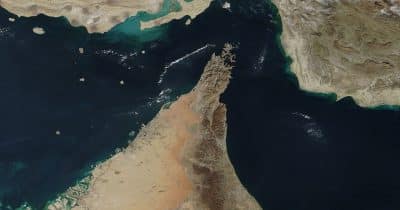
The Iran conflict is threatening $124 billion in annual remittances sent home by migrant workers across the Gulf. As traditional banking channels grow unreliable, many are turning to stablecoins — a shift that could ripple through global finance.
The $124 Billion at Stake
Each year, millions of workers from South Asia, Southeast Asia, and Africa send money home from Gulf countries. Those flows total an estimated $124 billion. They're lifelines for families and entire economies — accounting for a big chunk of GDP in places like Nepal, Bangladesh, and the Philippines.
But the Iran conflict has disrupted banking ties, made transfers slower, and in some cases blocked them entirely. Banks are tightening compliance out of fear of running afoul of sanctions linked to the conflict. That's left many workers scrambling for alternatives.
Why Stablecoins Are Gaining Ground
Stablecoins are cryptocurrencies designed to hold a steady value, often pegged one-to-one with the U.S. dollar. Unlike volatile Bitcoin, they don't swing wildly. That makes them practical for sending money.
A worker in Dubai can buy a stablecoin using local currency, transfer it to a relative in India or Pakistan via a digital wallet, and that relative converts it back to cash — all without touching a bank. The transaction is nearly instant and costs a fraction of traditional wire fees. With the Iran conflict pushing banks to cut off certain corridors, more workers are trying this route. It's not a fringe experiment anymore. It's becoming a necessity.
Potential Ripple Effects Across Global Finance
If the trend holds, the implications extend far beyond individual families. A significant portion of the $124 billion flow migrating to stablecoins could reduce the dominance of traditional remittance firms like Western Union and MoneyGram. It could also increase the volume of stablecoin transactions globally, drawing more attention from central banks and regulators.
Some governments in recipient countries may see this as a threat to their control over capital flows. Others might embrace it as a more efficient system. Either way, the Iran conflict is acting as a stress test — and the financial system is changing under pressure.
What Happens Next
The conflict shows no sign of easing. If remittance channels stay restricted, the shift to stablecoins will likely accelerate. Gulf authorities and recipient-country regulators will have to decide how to respond. Some may try to block or tax stablecoin transfers. Others may seek to integrate them into regulated frameworks.
For now, workers are choosing the path that works. And that path runs through stablecoins.