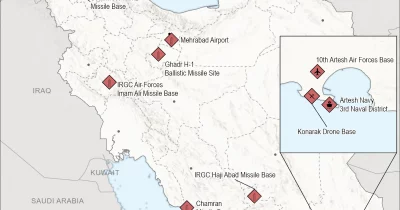
Israel and the United States carried out a military strike on Iranian boats near Larak Island on Tuesday, killing three people. The operation comes in the middle of a broader confrontation in the Strait of Hormuz where cryptocurrency is being used to finance a toll war that has disrupted commercial shipping.
The strike
Details remain limited, but the strike targeted Iranian vessels near Larak, a small island in the Persian Gulf. Three individuals died. Neither the Israeli nor the U.S. military has offered an official statement, though the operation was confirmed by regional security sources.
This isn't the first time the two countries have coordinated military action in the area, but the timing — right in the thick of a crypto-backed toll war — makes it stand out.
What's the crypto-toll war?
For months, a shadowy network has been demanding fees from cargo ships passing through the Strait of Hormuz, often paid in digital assets. The scheme has drawn in local militias, privateers, and — according to intelligence shared by Gulf states — elements tied to Iran's Islamic Revolutionary Guard Corps. Payments move through a mix of stablecoins and privacy coins, making the flow hard to trace.
The toll war has spiked insurance rates for tankers and pushed some shipping lines to reroute around the Cape of Good Hope. Tuesday's strike suggests the U.S. and Israel are now testing a more direct approach.
Why Larak matters
Larak Island sits near the mouth of the Strait. Iranian forces have used it as a staging point for small-boat patrols that harass merchant vessels. The boats hit in Tuesday's operation were believed to be part of that patrol network — and possibly tied to the toll collection operation.
Three deaths doesn't sound like a large number, but in a confined waterway where every escalation risks a wider confrontation, it's a significant step.
What comes next
The Strait of Hormuz sees about a fifth of the world's oil transit daily. A sustained military campaign could push oil prices higher and draw in other regional players. For now, the crypto dimension adds a layer of complexity: targeting the financing side of the toll war has proven difficult because the payments are decentralized.
No one has claimed responsibility for Tuesday's strike, and Iran hasn't announced any retaliation. But the next 48 hours will tell whether this was a one-off raid or the start of a broader campaign to break the crypto-funded blockade.