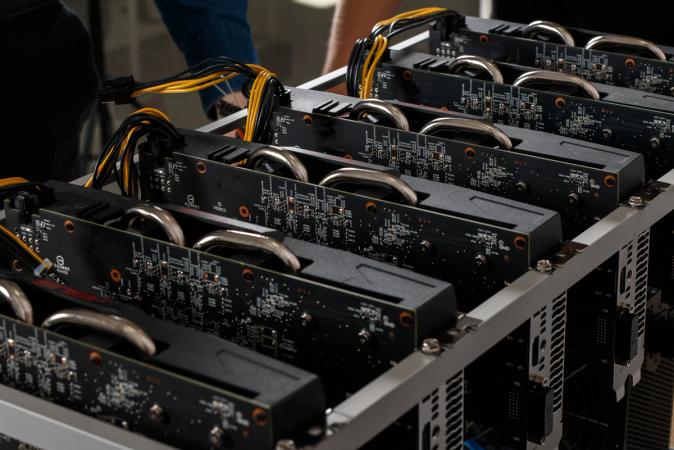
Bitcoin mining firm Luxor has raised $16 million in a funding round led by CMT Digital, with mining-hardware makers Canaan and MicroBT also taking part. The company says the new capital will go toward expanding into AI compute trading, hardware, and derivatives.
The round is notable for who's in it. Two of the largest manufacturers of Bitcoin mining rigs — Canaan and MicroBT — put money into a firm that arguably competes with their own customers for compute capacity. The strategic logic cuts both ways: hardware vendors have a vested interest in the health of the mining and compute ecosystem, and Luxor sits close to a lot of that activity.
What the money is for
Luxor's stated plans cover three areas. AI compute trading is the headline. That means Luxor wants to be a venue or intermediary for buying and selling compute capacity used for AI workloads, a market that has tightened as demand for GPU time has climbed. The company is also expanding in hardware and derivatives, though the announcement didn't break out how the $16 million will be split across those lines.
Derivatives are a more natural fit for a mining firm than it might look. Luxor already operates in the mining-adjacent financial space, and futures, options, and hedging products are how miners manage the volatility of hash price and energy costs. Extending that toolkit toward compute is a short step.
The AI pivot in mining
Mining companies have been edging toward AI for a while now. The overlap is physical: data centers, power contracts, cooling, and access to energy. A mining operation that can spin up racks for GPUs isn't doing something radically different from what it already does with ASICs. What Luxor is proposing is less about running AI hardware itself and more about trading the compute that hardware produces.
That's a different business. Trading compute requires market structure, pricing benchmarks, and counterparties willing to take the other side of a contract. It's a thin market compared with Bitcoin spot or derivatives, and it doesn't have the standardized contracts that make those markets liquid. Luxor is effectively betting that gap closes.
The involvement of Canaan and MicroBT suggests the hardware side of the industry sees value in that bet. Both firms sell rigs to miners who then either mine Bitcoin or, increasingly, seek other uses for their power and facilities. If a liquid compute market develops, it gives those buyers another way to monetize their machines — and gives the manufacturers a reason to care about how that market is structured.
Still early
Luxor didn't disclose the valuation at which the round closed, or a timetable for the AI compute trading buildout. The company also didn't specify whether the derivatives expansion would cover compute-linked contracts, hash-rate products, or both. Those details matter for anyone trying to judge how serious the trading desk ambitions are versus a broader repositioning of the business.
What's clear is that the mining sector keeps looking for revenue that isn't tied solely to the price of Bitcoin and the cost of electricity. This week's raise is another data point in that trend, and it comes with hardware-industry money attached. The next thing to watch is whether Luxor announces a product — a compute contract, a trading venue, anything with a launch date — or whether the expansion stays in the planning stage through the rest of 2026.