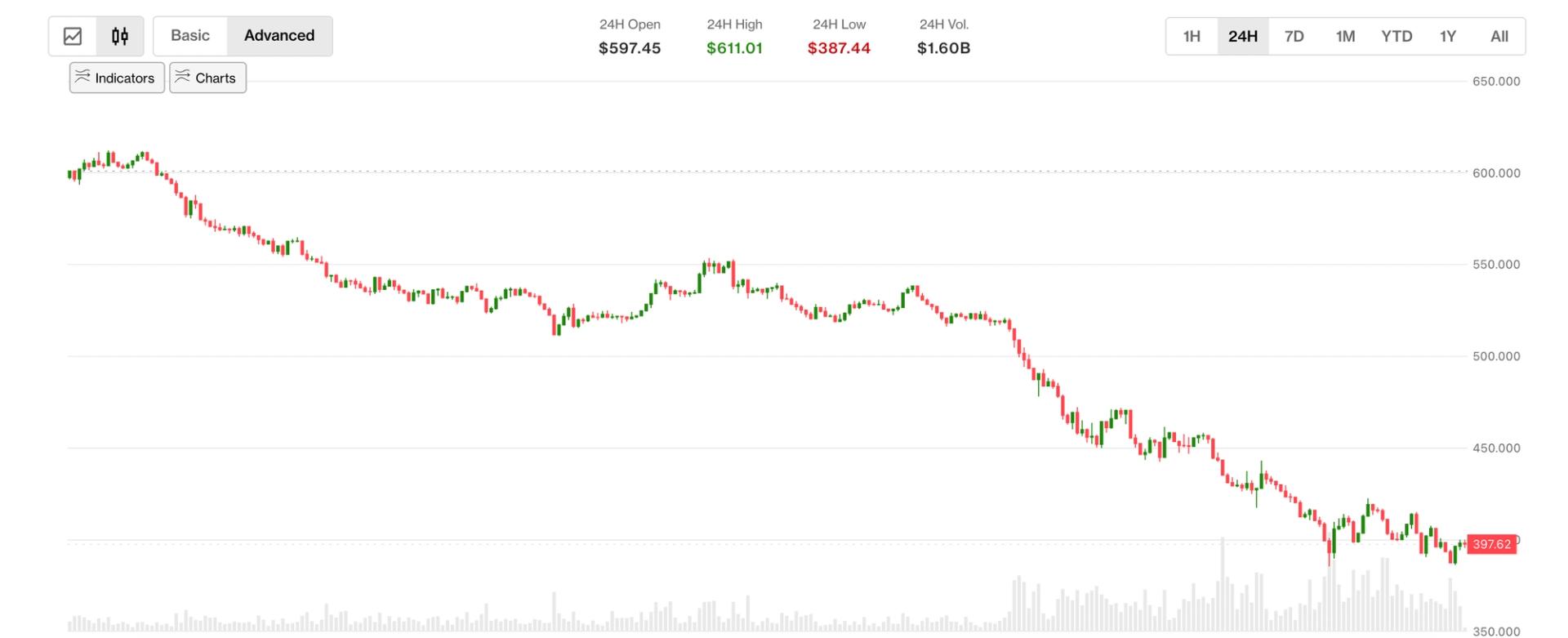
MicroStrategy, the largest corporate holder of Bitcoin, is staring at an $11 billion unrealized loss on its cryptocurrency holdings as of early June 2026. The paper loss — driven by a decline in Bitcoin's market price — is not a realized hit to cash flow, but it lays bare the risks of the firm's heavily leveraged Bitcoin strategy. The situation is drawing fresh scrutiny from investors and regulators alike, with some wondering whether the company's approach could ripple into broader markets.
How the loss stacks up
The $11 billion figure represents the gap between what MicroStrategy paid for its Bitcoin stash and today's market value. The company began accumulating BTC in 2020 and has since used debt issuances and convertible bonds to pile on more. That leveraged buying helped drive the firm's holdings to over 200,000 Bitcoin at one point. But with prices down sharply from late-2024 peaks, the arithmetic has turned ugly.
To be clear: MicroStrategy hasn't sold. The loss is unrealized. But the math is a stark reminder that aggressive leverage works both ways. The company's stock price has also taken a beating, reflecting investor unease about the size of the paper hole.
What 'unrealized' really means
Unrealized losses don't trigger margin calls or immediate cash demands — unless the loans backing them require collateral maintenance. MicroStrategy's debt structure is key. The company issued billions in convertible notes and secured loans, some tied to the value of its Bitcoin. If BTC slides further, those covenants could start blinking red.
So far, MicroStrategy has managed to service its debt. But the $11 billion paper loss erodes the cushion. Lenders may start asking tougher questions at refinancing time, especially if the market stays soft.
Leverage risk and market stability
The risk isn't just micro. MicroStrategy's outsized position — roughly 1% of all Bitcoin that will ever exist — means its distress could rattle the broader crypto market. If the firm were ever forced to sell into a downturn, the price impact could be severe. That scenario isn't imminent, but the fear alone weighs on sentiment.
Some analysts have pointed out that the unrealized loss also hurts investor confidence in the idea of Bitcoin as a corporate treasury asset. If the poster child for that strategy is down $11 billion on paper, other firms may think twice before following suit.
What comes next
MicroStrategy's next earnings call — expected in early August — will be the moment of truth. Executives will have to address the loss and explain the path forward. The company has signaled it has no plans to sell, but it's also running out of easy financing options. The Bitcoin market itself will determine whether that $11 billion stays paper or eventually becomes real.