Executive Summary
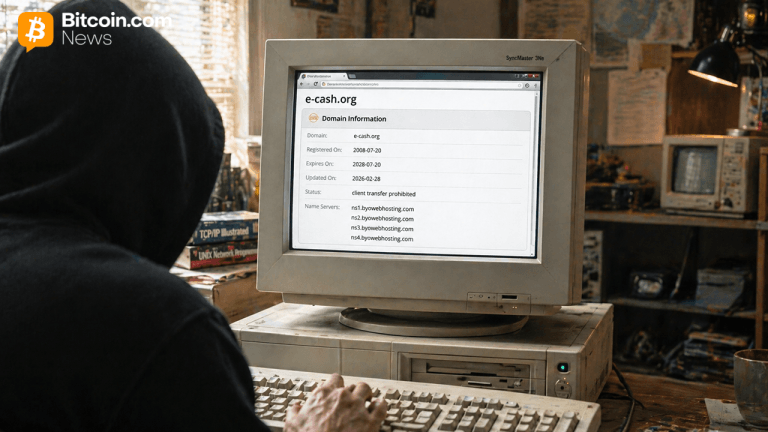
Bitcoin historians have turned their attention to a newly highlighted timeline: the e‑cash.org domain was registered on July 20, 2008, while bitcoin.org appeared roughly a month later, around August 18, 2008. The sequence has prompted renewed discussion about whether Satoshi Nakamoto may have secured the e‑cash.org address before establishing the more widely known bitcoin.org site.
What Happened
Domain registration records show that e‑cash.org was created on July 20, 2008. Bitcoin.org’s registration followed 29 days later, placing its launch in mid‑August 2008. A handful of Bitcoin historians, including researcher Gwenn Branwen, have publicly speculated that the earlier e‑cash.org registration could indicate a deliberate step by the pseudonymous creator of Bitcoin before the public unveiling of the project.
Background / Context
The early days of Bitcoin are shrouded in mystery, with few concrete details about the identity of its creator, Satoshi Nakamoto. Domain registrations provide one of the few verifiable data points from that period. e‑cash.org, a name reminiscent of earlier digital cash concepts, predates the more iconic bitcoin.org by less than a month. The proximity of these dates suggests a possible strategic approach to securing online real estate before the Bitcoin whitepaper was released in October 2008.
Gwern Branwen, a well‑known figure in the Bitcoin research community, has highlighted the timing as “intriguing” in a series of blog posts. While Branwen stops short of claiming definitive proof, the observation adds another layer to the ongoing effort to piece together Satoshi’s early actions.
Reactions
Within the Bitcoin research community, the revelation has been met with a mix of curiosity and caution. Some historians see the e‑cash.org registration as a potentially significant clue, while others warn against over‑interpreting a single data point. Online forums and discussion boards have featured threads debating whether the e‑cash.org name reflects an experimental phase or a deliberate misdirection.
The broader cryptocurrency audience has taken note, with several news outlets picking up the story and framing it as a fresh piece of the Satoshi puzzle. However, there has been no official comment from any party claiming ownership of either domain.
What It Means
If the e‑cash.org registration does indeed belong to Satoshi Nakamoto, it could suggest that the creator was exploring multiple naming conventions before settling on “Bitcoin.” The choice of “e‑cash” aligns with earlier proposals for electronic money, hinting at a possible evolution of ideas that culminated in the Bitcoin protocol.
From an academic perspective, the timeline reinforces the importance of domain data as a forensic tool in cryptocurrency history. It also underscores the challenges researchers face when trying to attribute early actions to an anonymous individual.
What Happens Next
Researchers plan to dig deeper into WHOIS records, historical web archives, and any ancillary metadata that might link the e‑cash.org registration to known Satoshi communications. Continued analysis could either strengthen the hypothesis or reveal alternative explanations, such as the domain being registered by a third‑party observer of the emerging digital cash movement.
As the debate unfolds, the Bitcoin community remains attentive to any new evidence that could shed light on the origins of the world’s first decentralized cryptocurrency.