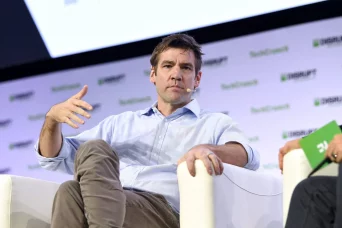
Raoul Pal, the former Goldman Sachs executive and founder of Real Vision, made his preference clear this week at Consensus 2026: Solana, not Bitcoin, offers the bigger growth opportunity as artificial intelligence reshapes the crypto landscape. Pal described crypto as the 'Universal Basic Equity' of the AI age, arguing that Solana's high throughput and low transaction costs make it a natural fit for machine-to-machine microtransactions—something Bitcoin, designed purely as a monetary asset, can't do efficiently.
Why Solana gets the nod
Pal's reasoning centers on utility. He said that in an era where AI agents will need to execute thousands of tiny automated payments per second, Solana's architecture beats Bitcoin's. Bitcoin, he argued, is a store of value, not a settlement layer for high-frequency, small-value robot-to-robot trades. That distinction matters more as the industry moves beyond human-driven speculation into machine-driven activity.
AI agents predicted to dominate DeFi within five years
Pal went further, predicting that within five years AI agents will make up 60% of DeFi users, surpassing human users. That shift, he said, will require blockchains that can handle constant, low-cost interactions. His bet on Solana is a bet on that future. The prediction landed at a conference—Consensus 2026—that leaned heavily into AI agents, DeFi, tokenization, stablecoins, and institutional infrastructure. The agenda reflected a market increasingly focused on how crypto can serve automated systems, not just human traders.
Other voices: Hayes, O'Leary, Garlinghouse
Not everyone at Consensus shared Pal's enthusiasm for regulation or for the AI-crypto marriage itself. Arthur Hayes, co-founder of BitMEX, doubled down on his libertarian stance, stating that crypto doesn't need regulation and exists outside the system entirely. Kevin O'Leary, the venture capitalist, took a different angle, stressing the importance of AI in the US's competition with other countries—a nod to the geopolitical stakes of the technology. Meanwhile, Ripple CEO Brad Garlinghouse offered a more measured view, saying that his company isn't using AI to reduce headcount, a reassurance as automation fears ripple through the workforce.
The conference didn't resolve the tension between those who want crypto to be a parallel economy and those who see it as a technology that must integrate with existing systems. But the debate itself signals where the industry's attention is now: on AI agents, throughput, and the question of who—or what—will be using these networks a few years from now.