Russia's Federal Security Service has formally charged Telegram founder Pavel Durov with facilitating terrorist activities and placed him on an international wanted list. The charges stem from Telegram's alleged failure to remove material used by Ukrainian intelligence and extremist groups to coordinate attacks inside Russia.
What the charges say
The FSB's case is built around state security and wartime terrorism, a different legal framework from the investigation Durov faced in France in 2024. That earlier case focused on platform moderation and led to a sharp drop in the price of Toncoin, the cryptocurrency tied to Telegram. Toncoin later rebranded to GRAM, a move that tied the token more closely to Durov's vision and increased what analysts call founder risk.
Telegram's response — and silence
Telegram's official X account responded to the charges by posting an image of Durov making an obscene gesture. No written statement accompanied the image. Durov himself has not publicly commented on the latest charges.
Where is Durov?
His whereabouts remain unclear. A May 16 post placed him in Dubai, where he holds a passport alongside his French citizenship. A July 23 update suggested he was in Georgia and expected to return soon. Durov has not lived in Russia for more than a decade.
Market reaction and founder risk
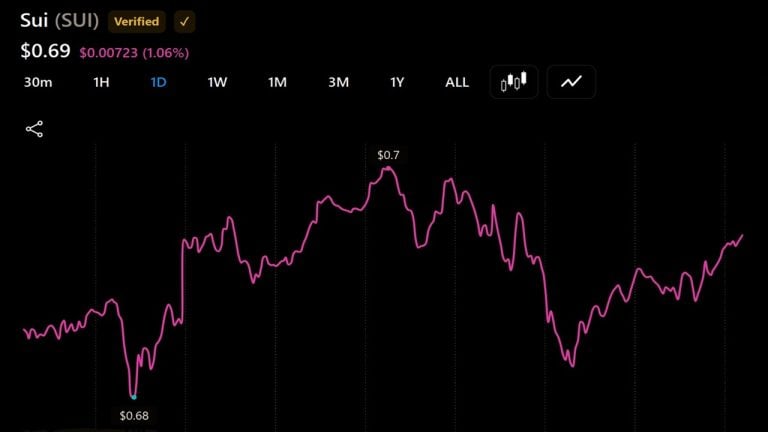
The market reaction to the terrorism charges was more muted compared to the 2024 arrest in France, when Toncoin plunged sharply. GRAM's price dropped in early trading and added to recent weekly losses. The terrorism allegations raise concerns for banks, fiat on-ramps, and exchanges supporting GRAM under anti-money laundering and counter-terrorism financing rules. Still, Telegram's reported user base of over one billion could support adoption despite the founder risk.
Russia's complicated history with Telegram
Russia has tried to restrict Telegram since 2018 while continuing to use the platform for official communications. An April summons was delivered to a former Russian address of Durov, suggesting authorities have struggled to reach him directly.
It is unclear whether Russia will pursue extradition or rely on Interpol. Durov's multiple passports and his absence from Russia for years complicate any enforcement action.