Executive Summary
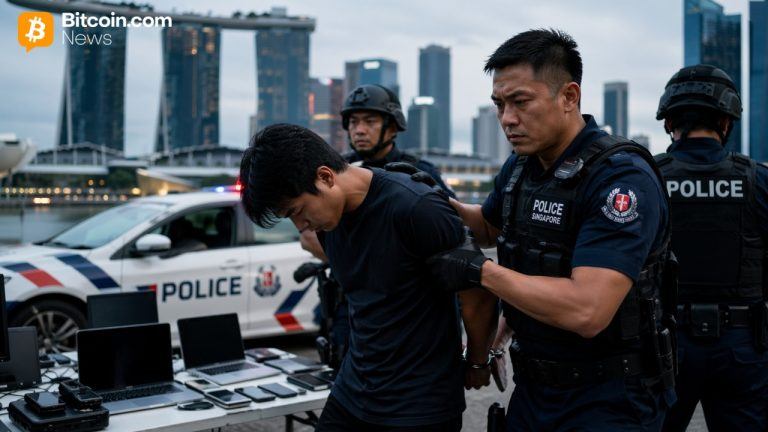
The Singapore Police Force has launched an expanded operation this week to target cryptocurrency‑related scams. In partnership with leading crypto exchanges—Coinbase, Gemini, Upbit and local platform Coinhako—the police now have access to real‑time blockchain analytics provided by Chainalysis. The collaboration enables rapid identification and freezing of accounts linked to fraudulent schemes, aiming to protect retail investors in Singapore’s digital‑asset market.
What Happened
Authorities announced the rollout of a new enforcement initiative focused on scam‑related crypto activity. The operation builds on earlier efforts to police illicit digital‑asset transactions, but this time it incorporates a direct data‑sharing pipeline with four major exchanges. When a suspicious transaction is flagged, the exchanges can immediately suspend the associated wallet, while investigators trace the flow of funds on the blockchain. Chainalysis supplies the analytical backbone, mapping illicit patterns and pinpointing the entities behind them.
Background / Context
Singapore has cultivated a reputation as a hub for fintech innovation, yet its rapid adoption of cryptocurrencies has also attracted fraudsters. Retail investors—many of whom are first‑time participants in the crypto space—have been targeted by phishing, Ponzi schemes, and fake token offerings. The police force has previously conducted periodic sweeps, but the sheer volume of blockchain data limited the speed of response.
By integrating exchange‑level transaction monitoring with Chainalysis’ forensic tools, the new framework closes that gap. The participating exchanges—global platforms Coinbase and Gemini, South‑Korea’s Upbit, and Singapore‑based Coinhako—have agreed to share transaction metadata in real time, a practice that was previously confined to ad‑hoc requests.
Reactions
Industry observers welcomed the move as a significant step toward safeguarding the ecosystem. Analysts noted that the combined reach of the four exchanges covers a substantial share of crypto trading volume in Singapore, increasing the likelihood of early detection. Consumer‑advocacy groups praised the focus on retail protection, emphasizing that swift account freezes can prevent victims from losing their entire holdings.
While the exchanges have not issued detailed statements, their participation signals a willingness to cooperate with regulators and law‑enforcement agencies. Chainalysis, a leading blockchain intelligence firm, confirmed its role in providing the technical infrastructure, underscoring its experience in similar collaborations worldwide.
What It Means
The partnership creates a deterrent effect for scammers who rely on the anonymity of blockchain transactions. With real‑time monitoring, fraudulent schemes can be disrupted before funds are moved across multiple wallets or converted into fiat. For legitimate investors, the initiative adds a layer of confidence that the market is being policed proactively.
From a regulatory perspective, the operation exemplifies a collaborative model where public authorities and private platforms share data responsibly. It may set a precedent for other jurisdictions seeking to balance innovation with consumer protection, especially as cryptocurrency usage continues to rise across Asia.
What Happens Next
Police officials indicated that the crackdown will continue throughout 2026, with periodic reviews to assess effectiveness. The agencies plan to broaden the data‑sharing network, potentially involving additional exchanges and wallet providers. As more patterns are identified, the enforcement team expects to issue public advisories highlighting emerging scam tactics, helping investors stay informed.
Stakeholders are also exploring the possibility of integrating similar analytics into Singapore’s broader financial‑crime framework, which could extend beyond crypto to other digital assets. The ongoing collaboration signals a long‑term commitment to curbing illicit activity while fostering a safe environment for digital‑asset participation.