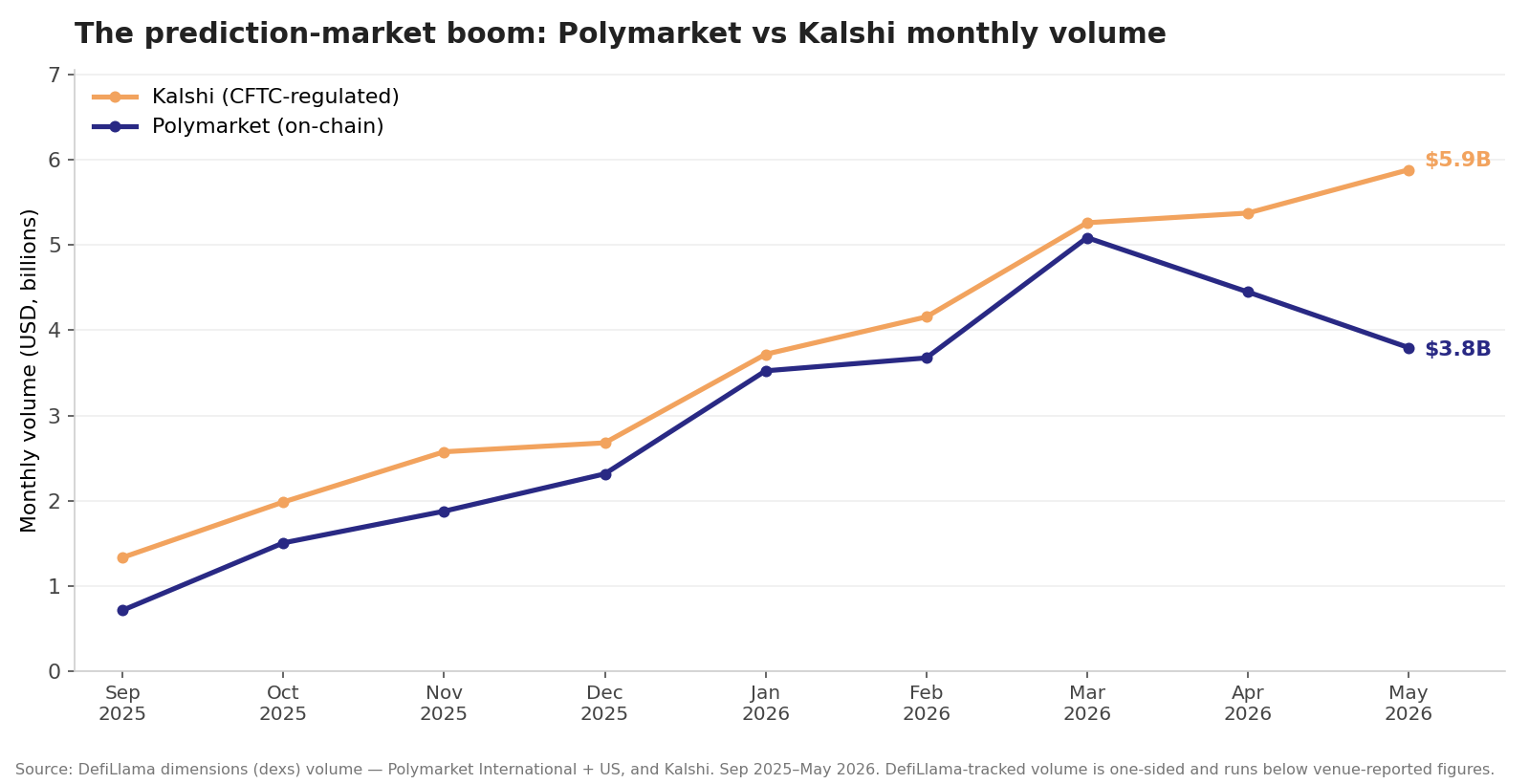
Chainalysis says the 2026 World Cup was a breakout moment for blockchain-based betting. A report published July 30 put prediction market volume at $20 billion, with more than 400,000 wallets taking part in crypto betting and digital collectible trades totaling $24 million.
The $20 billion World Cup prediction market
The expanded tournament had 48 teams and 104 matches, so there were simply more individual outcomes to trade. That's part of why volume hit $20 billion. But the report also points to a behavioral shift: football fans got comfortable using blockchain infrastructure to express views on matches, rather than just watching from the sidelines.
Prediction markets vs. the sportsbook
Prediction markets work differently from traditional sportsbooks. In a prediction market, participants buy and sell contracts whose prices move as the event approaches. A sportsbook posts fixed odds and bettors wager against the house. Crypto sportsbooks keep the familiar betting structure but change the money flow: users fund and withdraw in crypto, and settlement happens on-chain.
Stablecoins and the wallet flow
Stablecoins like USDT and USDC are a natural fit for betting because they track the U.S. dollar, so bettors aren't exposed to bitcoin's price swings while they hold a position. They also run on multiple networks, which means transaction costs and confirmation times vary depending on which chain a bettor picks. That adds another layer of choice to the whole process.
The risks of irreversible bets
The typical flow is wallet-based: hold crypto, transfer it to the sportsbook, place bets, then withdraw back to your wallet. Blockchain transactions are irreversible, so sending tokens to the wrong address or to an incompatible network can mean lost funds. That's a real hazard for newcomers. Dexsport is one example of a crypto-native sportsbook that combines conventional sports markets with this wallet-driven funding model.