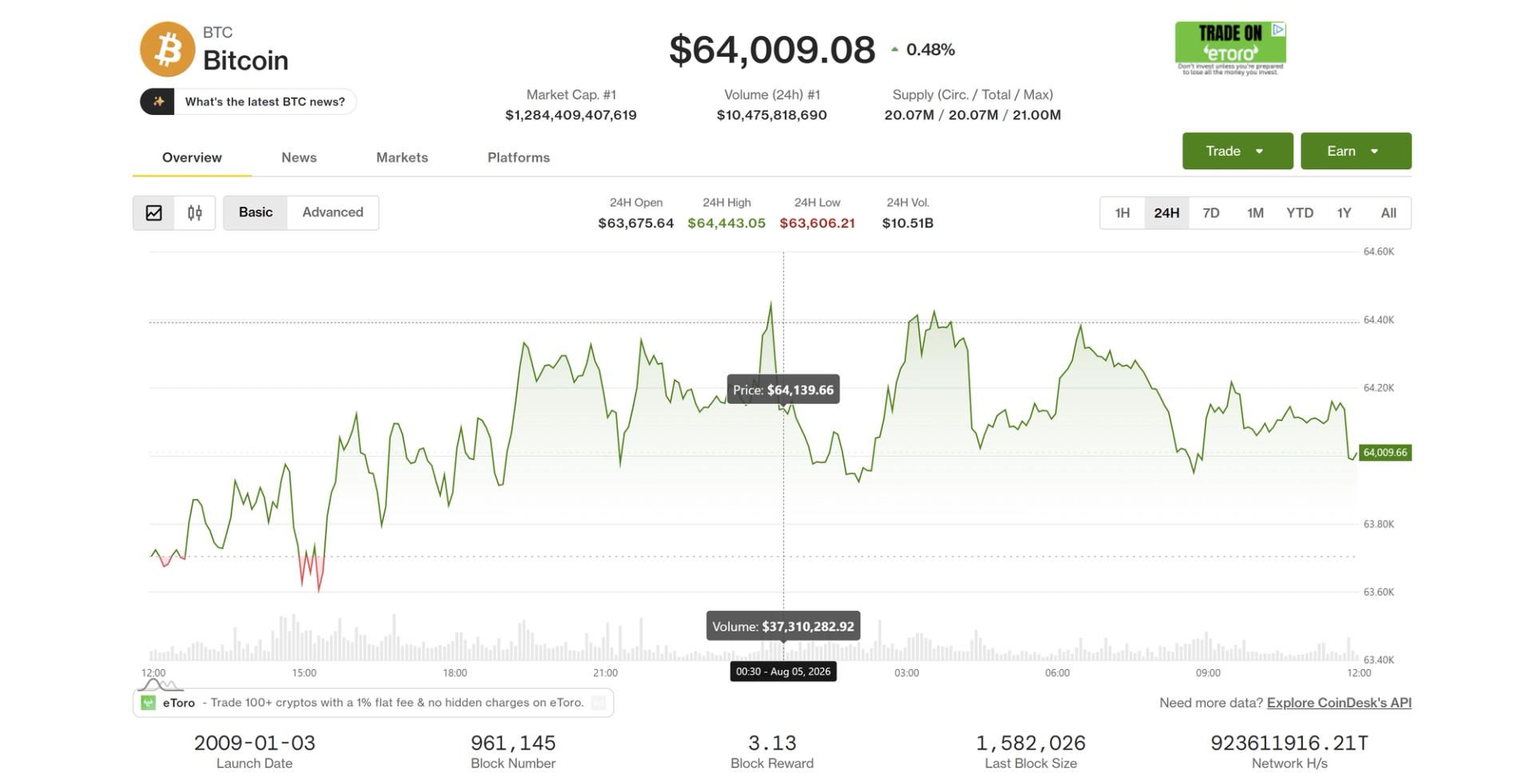
There's a rough-and-ready rule some traders use to navigate Bitcoin's four-year halving cycle: buy roughly 500 days before the event, then sell about 500 days after. The pattern has historically produced profits, and with the next halving expected in 2028, it's getting a fresh look.
How the rule works
The idea is simple. Bitcoin's supply halves every 210,000 blocks, an event that tends to spark a bull run. The 500-day rule tries to capture the run-up and the peak. Buy 500 days before the halving, hold through the event, and exit 500 days after. That's a total hold of about 1,000 days — roughly 2.7 years.
It's not a precise science. The exact dates depend on block times, which can vary. But the heuristic gives traders a rough calendar to work with.
Historical track record
The rule has worked in past cycles. Traders who bought 500 days before the 2012, 2016, and 2020 halvings and sold 500 days after would have come out ahead, according to the pattern. No one's claiming it's a guarantee — past performance doesn't predict future results — but the consistency has kept the rule in circulation.
Critics point out that the 500-day window is arbitrary. Why not 400 or 600? The answer is that it's a heuristic, not a law. It's a way to avoid trying to time the exact top or bottom.
With the 2024 halving already in the rearview mirror, the next one is roughly two years out. That puts the buy window somewhere around early 2026 — which is now. Traders who follow the rule would be looking to accumulate, or at least watching the calendar.
The timing isn't everything. Market conditions, regulation, and broader economic factors all play a role. But for those who like a simple framework, the 500-day rule offers a starting point.
Whether it holds up for the 2028 cycle is an open question. The next few months will show if traders are actually following the playbook.