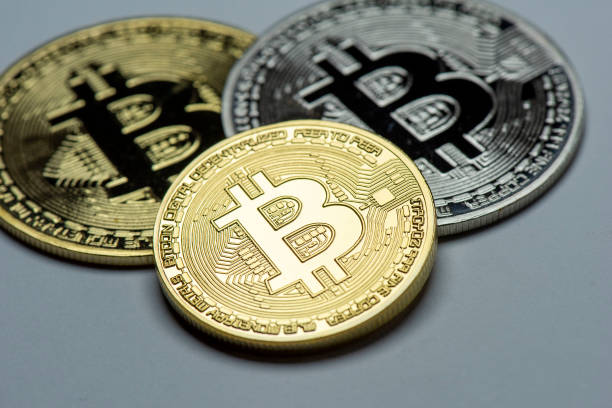
The U.S. Department of Commerce will invest $2 billion into quantum chip foundries and startups, the agency said Thursday. The funding is a direct response to the approaching 'Q-Day' — the moment when quantum computers become powerful enough to break the elliptic curve cryptography that secures Bitcoin and most of the crypto ecosystem.
Why Q-Day matters for Bitcoin
Bitcoin's security relies on the assumption that no classical computer can efficiently solve the discrete logarithm problem. A sufficiently advanced quantum machine could. That's Q-Day. Once it arrives, private keys could be extracted from public keys, and transactions could be forged. The crypto industry has been warned for years, but the timeline keeps shrinking. The Commerce Department's investment is a signal that the federal government now sees this as a near-term risk, not a distant hypothetical.
Where the money goes
The $2 billion will flow to quantum chip foundries and early-stage startups working on both hardware and quantum-resistant algorithms. The Commerce Department hasn't named specific recipients yet, but the announcement puts the U.S. in direct competition with other nations racing to build viable quantum infrastructure. For crypto holders, the real bet is that these chips will also be used to develop and test post-quantum cryptography before the bad actors get their hands on a capable machine.
The timeline question
The department didn't give a hard deadline for Q-Day. Estimates from researchers still range from five to fifteen years. But the investment is front-loaded — the money is expected to start flowing this year. That suggests officials think the window is closing faster than previously assumed. Bitcoin's core developers have already been experimenting with quantum-resistant signature schemes like Lamport signatures, but network-wide adoption requires a soft fork or hard fork that takes years to coordinate. The new funding could speed up that research.
This isn't a regulatory action or a mandate. It's a check. But it's the biggest single government commitment to quantum crypto defense so far. Expect more details on which foundries and startups get funded in the coming months. The crypto industry will be watching closely — especially the exchanges and custody providers that hold the bulk of Bitcoin's value. They'll have to decide whether to start migrating to quantum-resistant addresses before the government tells them to.